








|
Mendapatkan anda Trinity Audio pemain siap ...
|
Mirror vs Camera?You check yourself in the bathroom mirror and feel great. Then you see a photo someone took five minutes later — and it looks like a completely different person. What is actually going on?
Neither the mirror nor the camera shows you a perfectly accurate image. A mirror flips your face left to right and shows you in real time. A camera shows the un-flipped version but distorts it through the lens, angle, and lighting. The closest thing to “the real you” is a photo taken from 6–10 feet away with the rear camera in natural light — but even that is just one piece of the picture.
Let’s break down exactly how each one works, where each one goes wrong, and what you can actually do about it.

How Do Mirrors Actually Work?
Most people use a mirror dozens of times a day without ever stopping to think about what it’s really doing. Once you understand the basics, you’ll never look at your reflection the same way again.
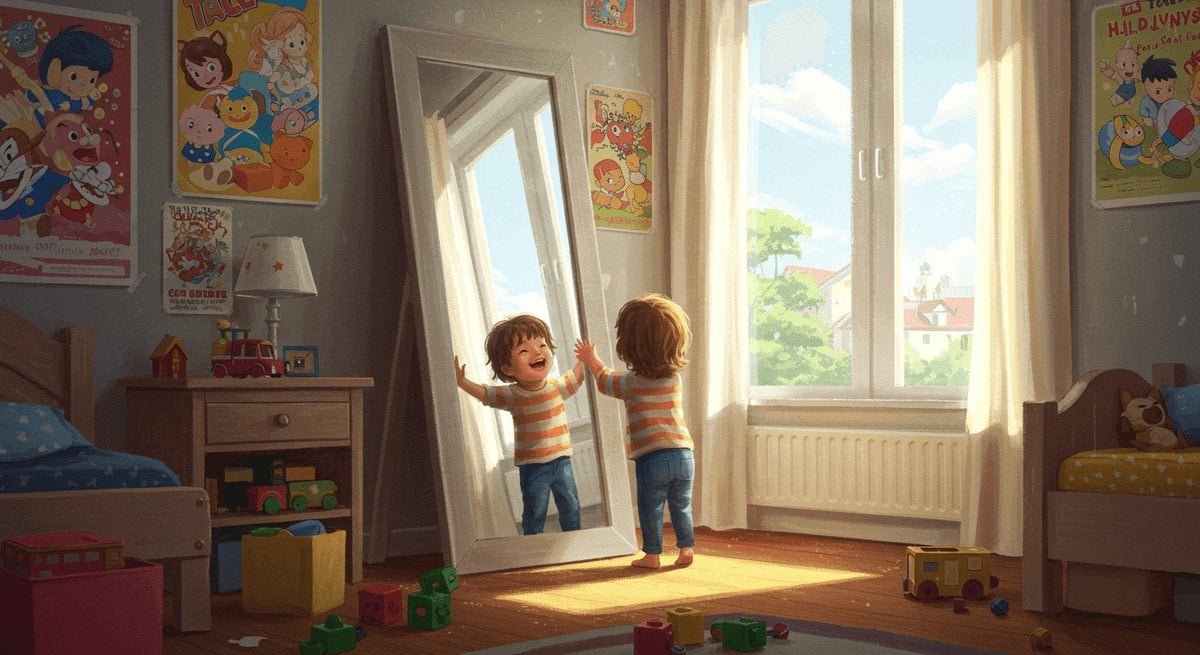
A mirror works by bouncing light off a flat, shiny surface. When light from your face hits the mirror, it bounces straight back — but with one catch: everything is flipped left to right. Your left hand appears on the right side. Your right side appears on the left. This is why your mirror self looks slightly different from every photo ever taken of you — it’s literally a reversed version of your face.
Here’s an easy way to see this in action. Next time you’re at the mirror, raise your right hand. Your reflection raises its left hand. That’s the flip. Your brain has seen this flipped version of your face every single morning since you were a baby, so it feels completely normal to you. But it’s not the face anyone else ever sees in real life.
The quality of what you see also depends a lot on the mirror itself. A cheap bathroom mirror uses thin glass (sometimes as thin as 3mm) with a low-quality backing. This causes very slight warping — like a super mild funhouse mirror — that you’d never notice unless you had something to compare it against. A good bathroom vanity mirror uses glass that’s at least 5mm thick with a proper silver backing, giving you a flat, honest reflection. The angle the mirror is hung at matters too: even a slight tilt forward or backward changes how your face and body look in the reflection.
What Affects Mirror Accuracy?
A few small things quietly change what you see every time you look in the mirror — and most people have no idea they’re happening.
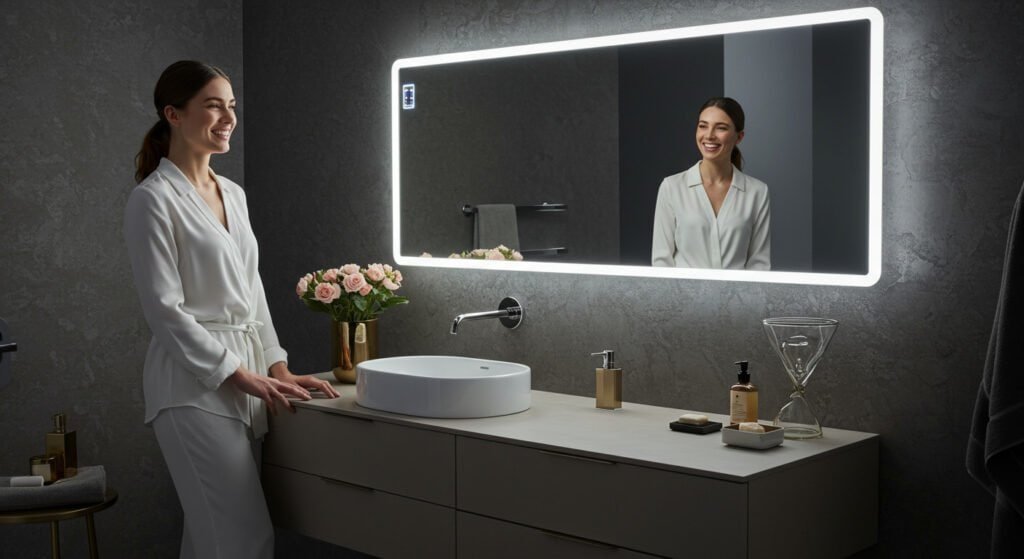
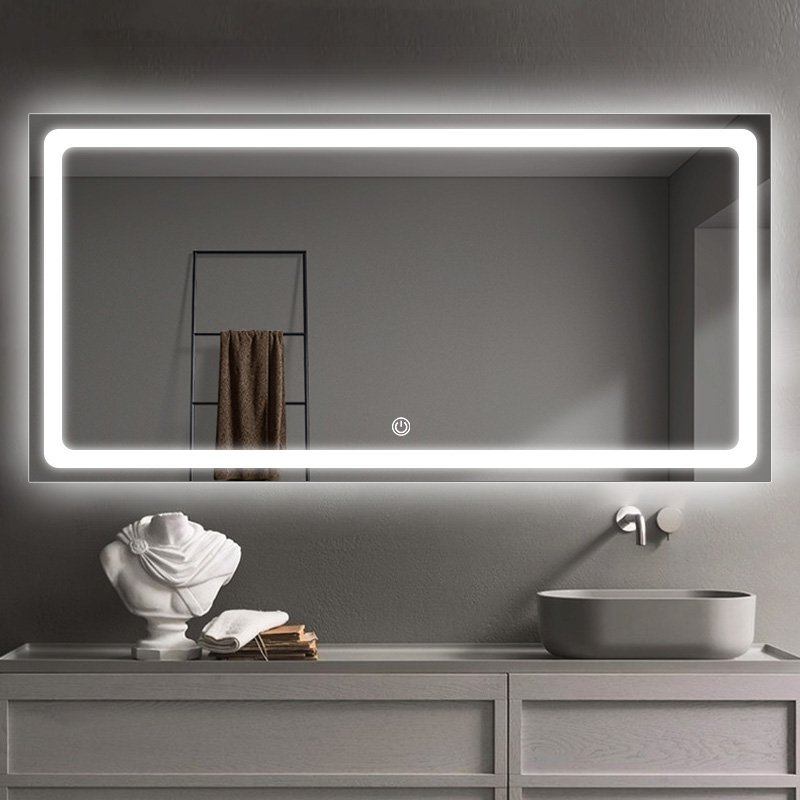
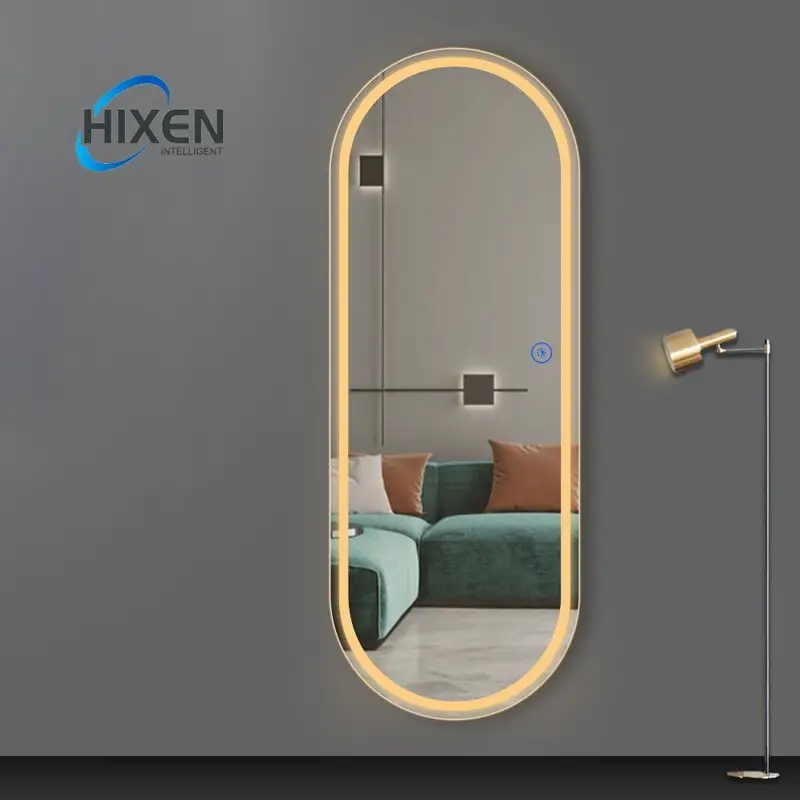
Mirror accuracy depends on four things: glass thickness (thicker glass stays flatter and warps less); the quality of the backing (a proper silver coating gives a truer, longer-lasting reflection); the angle it’s hung at (even a slight tilt changes how your proportions look); and the lighting around it (the color and direction of your bathroom light dramatically changes how your face appears). A lighted vanity mirror or LED bathroom mirror solves the lighting problem by putting steady, front-facing light directly on your face.
Imagine you’ve been wearing slightly tinted sunglasses for so long you’ve forgotten what colors look like without them. A cheap mirror does the same thing to your reflection — it bends it just enough to be slightly off, but you’d never know, because it’s all you’ve ever seen. This is why upgrading to a high-quality LED bathroom mirror with proper glass makes such a noticeable difference. What you see is genuinely what’s there — no subtle warping, no misleading angles.
How Do Cameras Capture Images?
A camera looks like it should be perfectly objective — it’s a machine, it just records what’s there. But cameras have their own set of quirks that change how your face looks, often in unflattering ways.
A camera works by focusing light through a lens onto a sensor, which records a flat, two-dimensional snapshot of a three-dimensional scene. The type of lens determines how your face looks in the image. Wide lenses (used in most phone front cameras) make things closest to the camera look bigger — which usually means your nose looks larger and your face looks wider than it really is. Longer lenses, used by professional portrait photographers, show faces in much more natural proportions.
Berikut ialah cara mudah untuk memikirkannya. Imagine you’re drawing a picture of a room, and you have to squish everything you see into a single flat sheet of paper. You have to make choices about what to exaggerate and what to compress. That’s what a camera lens does every time it takes a photo. There’s no setting that makes it perfectly neutral. Every lens makes trade-offs — and the wide lens on your phone’s front camera makes trade-offs that are particularly bad for close-up faces.
Why Does Your Phone Front Camera Make You Look Worse?
This is the thing most people suspect but never quite have confirmed: your phone’s front camera is genuinely, objectively bad for taking photos of faces. It’s not you — it’s the lens.
Phone front cameras use a very wide lens designed to fit more into the frame. At the short distance of a typical selfie — about 12–18 inches from your face — this wide lens exaggerates the size of whatever is closest to it, which is usually your nose. Professional photographers use a much less extreme lens for portraits, which shows faces with natural, undistorted proportions. Your phone’s front camera is basically the opposite of what portrait photographers use.
Think of it like this: have you ever pressed your face right up against a glass door and seen how your nose looks enormous and your face looks squashed? That’s an extreme version of what a wide-angle lens does. Your phone’s front camera is a milder version of the same effect. The fix is simple: switch to the rear camera and have someone else take the photo from at least 6 feet away. The rear camera uses a less extreme lens, and the extra distance removes most of the distortion. The photo will look much more like what you see in your bathroom mirror.
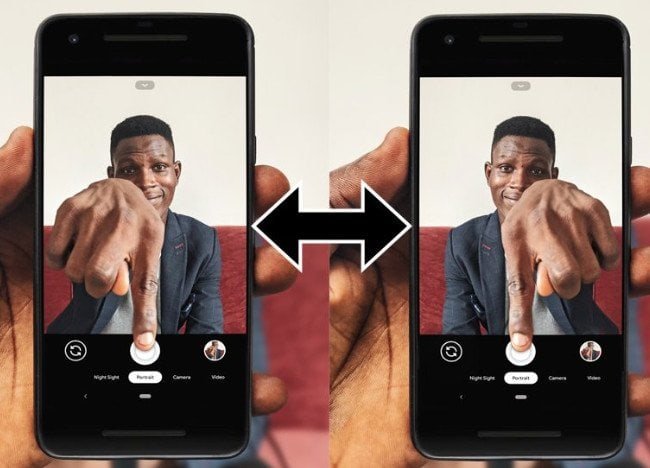
Cermin lwn Kamera: The Core Differences Explained
Now that you know how each one works, here’s a straight comparison of what they get right, what they get wrong, and why.
The four main differences between a mirror and a camera:
(1) Flip — mirrors reverse your face left to right; cameras show the un-flipped version everyone else sees;
(2) Depth — mirrors show you in three dimensions in real time; cameras flatten you into a 2D image;
(3) Lens distortion — cameras stretch and compress your features depending on the lens; good mirrors don’t;
(4) Motion vs freeze — cameras capture one frozen millisecond; mirrors show you moving naturally with real expressions.
Each of these differences hits differently. The flip is the most obvious — it’s why your mirror self has their hair parted on the opposite side from your photo self. The 2D flattening is subtler but just as important: your face has natural depth and dimension that a camera turns into a single flat layer. And the frozen-moment problem is easy to underestimate. In real life, people see you laughing, talking, and moving. A camera catches one random split second — and that one frame almost never represents the way you normally look. It’s like judging a song by one random note.
Perception of Accuracy: Cermin lwn Kamera
There’s an important difference between which one feels more accurate to you and which one actually is more accurate.
The mirror feels more accurate to you because you’ve seen it your whole life — it’s familiar, so it feels right. But the mirror actually shows a flipped version of your face that no one else ever sees. The camera shows the un-flipped version that everyone else sees every day — but it introduces its own problems through lens distortion, flat compression, and lighting. In short: the mirror feels more accurate; the camera (used correctly) is technically closer to what others see. Neither is the full picture.
Here’s a helpful way to think about this. When you hear a recording of your own voice, it sounds strange and off — “that doesn’t sound like me.” But that’s exactly what you sound like to everyone else. Your voice sounds different in your own head because of how your skull vibrates. The mirror works the same way: the version of you that feels most “right” is the one no one else has ever seen. The version that feels slightly wrong to you is the one your friends see every day and find totally normal. Understanding this one thing can change how you feel about photos of yourself.
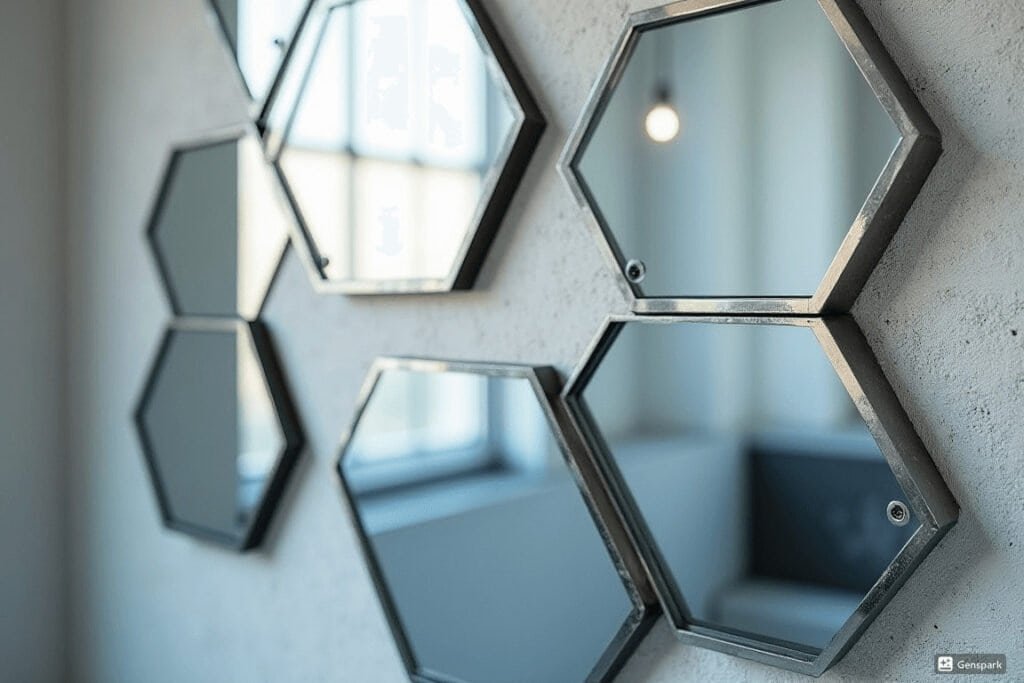
Comparing Accuracy in Different Scenarios
“Which is more accurate — mirror or camera?” doesn’t have one answer that fits every situation. It depends completely on what you’re trying to do.
Use a mirror for everyday tasks like doing your hair, applying makeup, or checking your outfit — it gives you real-time feedback and shows you in motion. Use a camera (rear lens, from a distance, in natural light) when you want to understand how you look to other people in photos. For video calls, most apps already mirror your own image back to you while you’re live — which is why watching a recording of the same call always feels strange.
Here’s a simple breakdown of which tool works better for which job:
| What You’re Doing | Better Tool | Why It Works Better |
|---|---|---|
| Doing your hair or makeup | Mirror | Shows you in real time as you move |
| Detailed makeup work | Lighted makeup mirror or LED mirror | Even light, no shadows, optional magnification |
| Understanding how others see you | Rear camera, from 6+ feet away | Un-flipped face, much less lens distortion |
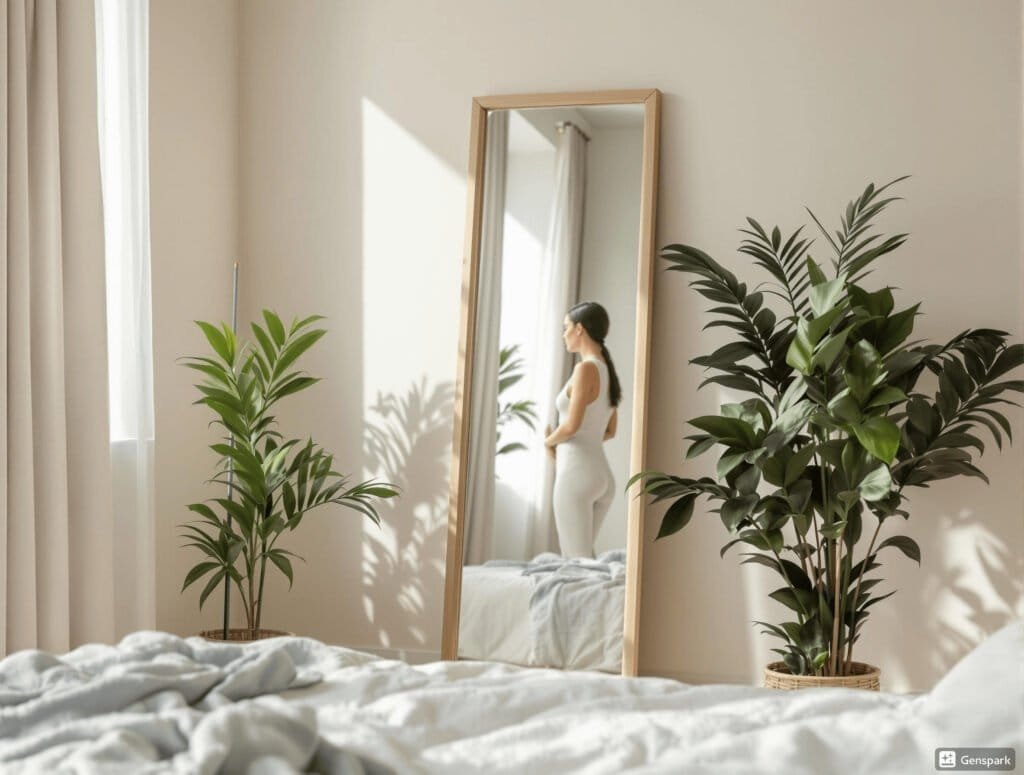
| Checking how an outfit looks | Full-length mirror | Real proportions, real-time motion |
| Posting a photo on social media | Rear camera + portrait mode | More flattering and less distorted |
| Panggilan video | Mirrored live preview | Feels natural to you while others see the real version |
| Professional headshot | Good camera with a portrait lens | Closest to how you actually look |
Psychological Factors in Self-Perception
The technical stuff only explains half of why you look so different to yourself in a mirror versus a camera. The other half is what’s happening inside your brain.
Three psychological effects shape how you see yourself in mirrors vs cameras. Pertama, the familiarity effect — we automatically like things we’ve seen more often, and you’ve seen your mirror face far more than your photo face. Kedua, self-recognition bias — your brain learned to recognize your own face by looking at mirrors, so photos of you feel subtly “off.” Third, negativity bias — when you look at a photo of yourself, your brain goes hunting for flaws, while everyone else looking at the same photo just sees a person.
In 1968, a psychologist named Robert Zajonc ran a simple experiment: he showed people images over and over again, and found that the more often people saw an image, the more they liked it — even if they didn’t remember seeing it before. He called it the Mere Exposure Effect. Applied to faces: you like your mirror face because you’ve seen it thousands of times. Your friends like your photo face because that’s the version they’ve seen thousands of times. The photo that makes you cringe is, to everyone who knows you, just a normal photo of you. They’re not being polite when they say it looks great. They genuinely mean it.

Why Do We Prefer Our Mirror Reflection?
Researchers have tested this directly — and the results are pretty eye-opening.
Studies show that people consistently prefer the mirror-flipped version of their own face, while their friends and family consistently prefer the un-flipped (photo) version. In these experiments, people are shown two photos side by side — one normal, one flipped — and asked which they prefer. Almost every time, the subject picks the flipped one, and the people who know them pick the normal one. It’s not about which face is more attractive. It’s purely about which version each person is most used to seeing.
You can actually test this at home right now. Take a photo of yourself, then flip it horizontally in your phone’s photo editor (most phones have this feature built in). Most people immediately feel that the flipped version looks “more like them.” That’s because it matches the mirror image your brain is used to. The un-flipped original is what everyone else sees — and finds completely normal. This simple trick is also the fastest way to understand why photos always feel slightly “off”: you’re seeing your face in a way you’re simply not used to.
Common Distortions in Mirrors and Cameras
Both tools change how you look — just in different ways. Knowing exactly what each one does makes it much easier to stop stressing about it.
Mirrors distort your appearance through: the left-right flip (always), subtle warping from cheap or thin glass, unflattering shadows from poor room lighting, and slight proportion changes from incorrect mounting height or angle. Cameras distort through: wide-angle lens stretching (especially bad on phone front cameras), flattening a 3D face into 2D, shadows from overhead lighting, and freezing one random moment of your face that you’d never choose to represent yourself.
Here’s a side-by-side of the most common issues with each tool, and the simplest way to fix them:
| Problem | Does Mirror Do This? | Does Camera Do This? | Simple Fix |
|---|---|---|---|
| Flips face left to right | Ya, always | No | Flip photos horizontally in editing |
| Makes nose look bigger | No | Ya (front camera, close range) | Use rear camera from 6+ feet away |
| Flattens your 3D face into 2D | No | Ya, always | Use portrait mode, shoot from further away |
| Creates shadows under eyes and nose | Only with bad lighting | Only with bad lighting | Use front-facing LED lighting or a window |
| Slightly warps proportions | Only cheap mirrors | No | Buy a mirror with 5mm+ glass and silver backing |
| Freezes an unflattering expression | No | Ya, always | Shoot in burst mode and pick the best frame |
| Makes colors look off | Only with bad lighting | Only with bad settings | Use adjustable LED lighting |
Which One Is Right — the Camera or the Mirror?
This is the question most people actually want answered. Here it is, straight.
Neither the mirror nor the camera is definitively “right.” The mirror shows a familiar but flipped version of your face that nobody else ever sees. A camera — used correctly, with the rear lens, from a normal distance — shows the un-flipped version that’s closer to what others see, but it compresses your face flat and is affected by lens distortion. If you had to pick one: a rear camera photo from 6–10 feet away in good natural light is the closest most people will get to seeing themselves as others see them.
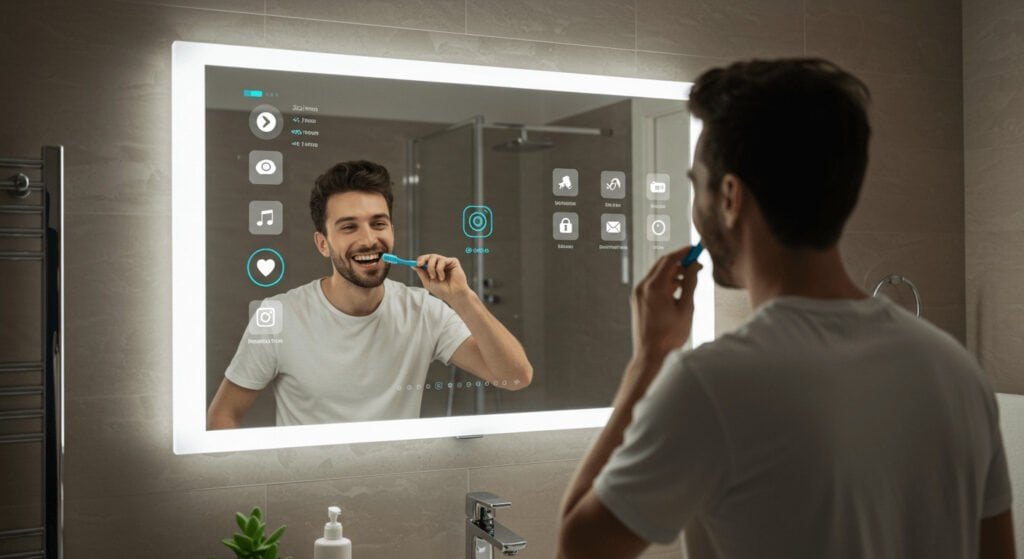
Here’s the analogy that makes this click: the mirror is like hearing your own voice in your head while you speak — familiar, comfortable, and slightly different from what everyone else hears. The camera is like hearing a recording of your voice — slightly jarring, but closer to what others actually experience. Neither one is the complete truth. The “real you” is a moving, talking, laughing, three-dimensional person that no flat mirror and no frozen photo can fully capture. The most accurate version of how you come across to other people isn’t in any image at all — it’s in the way you make people feel when you’re in the room.
How Does Lighting Affect Both Mirror and Camera?
Lighting might be the single most underrated factor in how you look — both in the mirror and in photos. The exact same face can look completely different depending on where the light is coming from.
Two things about lighting make a big difference: the color of the light (warm yellow light looks soft and flattering but hides details; cool white light is sharper and more accurate; natural daylight is the most honest) and the direction it comes from (light hitting your face from above creates dark shadows under your eyes and nose; light coming from in front of your face gives you an even, natural-looking reflection). A lighted bathroom mirror or backlit mirror with LED lighting solves this by putting the light directly in front of your face, where it belongs.
Think about why photos taken near a window almost always look better than photos taken in a bathroom under a ceiling light. The window wraps soft, even light around your face. The ceiling light hits the top of your head and throws the bottom half of your face into shadow — like a flashlight shining down from above. It’s not flattering, and it’s not accurate. A vanity mirror with LED lights built into the frame works exactly like the window, putting light in front of your face instead of above it. If you’ve never used one, the difference the first time is genuinely surprising — you’ll wonder how you ever got ready in bad light before.
What Kind of Mirror Shows You the Most Accurate Reflection?
Once you understand what affects mirror accuracy, choosing the right one becomes a lot simpler. Here’s what actually matters.
The most accurate mirror uses thick glass (at least 5mm) with a good silver backing that won’t warp or develop dark edges over time. But glass alone isn’t enough — lighting matters just as much. A lighted vanity mirror or LED bathroom mirror with adjustable color (from warm to cool white) shows your face under light that’s close to natural daylight, which is the most honest condition to see yourself in. Top rated LED bathroom mirrors with these features consistently get the best reviews for accuracy and longevity.
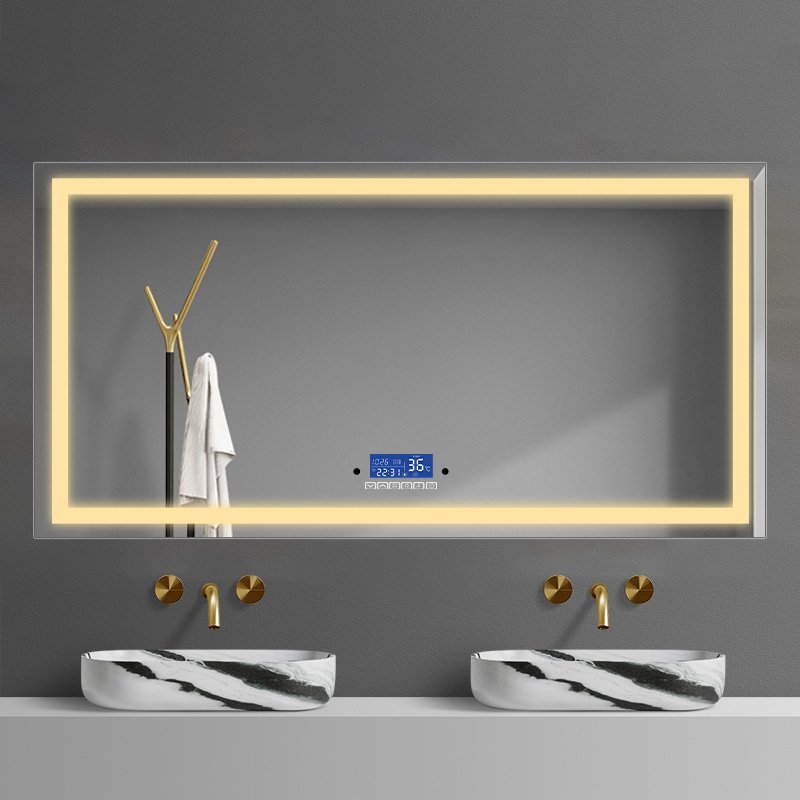
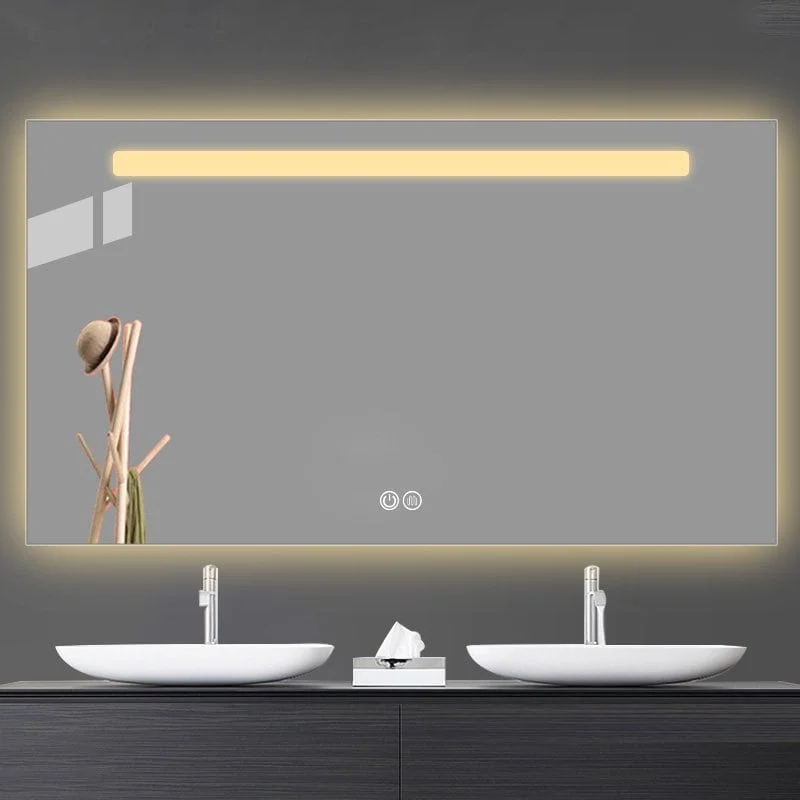
Different mirrors work best for different needs. A large rectangular bathroom mirror spanning the full width of your vanity gives you the clearest view of your face and upper body. The best bathroom mirrors for double sinks are either two individual lighted mirrors above each basin, or one wide backlit mirror that covers both. For detailed makeup or skincare, a lighted makeup mirror with built-in magnification (5x or 10x) shows you a level of detail a standard mirror simply can’t. A smart mirror with adjustable LED settings, anti-fog, and Bluetooth is the top-end option — it handles accuracy, practicality, and convenience all in one.
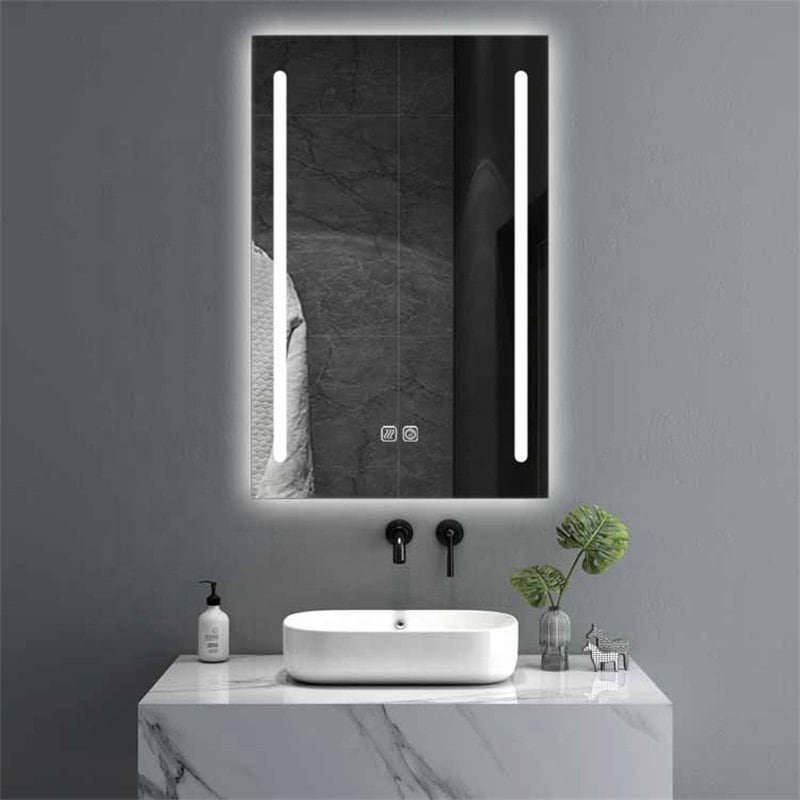
Whether you go with a clean best frameless bathroom mirror with LED edge lighting, a modern bathroom mirror with a black frame, or a wall mirror with lights around the border, the lighting system is the one feature that makes the biggest difference to what you actually see. Getting that right matters more than almost anything else — because even a perfect mirror in bad light will give you a misleading reflection.
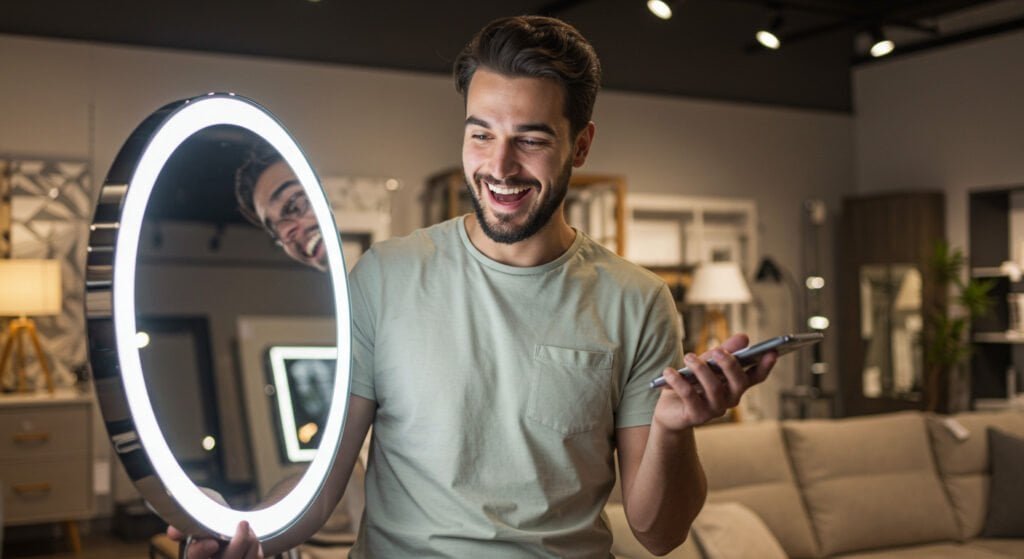
Choosing Between Mirror and Camera
You don’t have to choose one forever. You just need to know which one is right for which moment.
Use a mirror for: doing your hair, applying makeup, checking an outfit, or any task where you need real-time feedback and want to see yourself in motion. Use a camera for: understanding how you appear in photos, preparing for a video or shoot, or getting a sense of how others see you. For the most accurate camera-based check, use the rear camera from at least 6 feet away in natural or good LED lighting — and avoid the front camera for anything except a quick glance.
If you’re constantly using your phone’s front camera to assess how you look, switching to a high-quality bathroom mirror will give you more reliable, more consistent feedback almost every time. The front camera is designed for convenience — for quick selfies and video calls. It is not designed to show you what you actually look like. A good lighted vanity mirror for bathroom use, with quality glass and adjustable LED lighting, is specifically designed to show you clearly and accurately. That’s a very different thing — and once you experience the difference, the front camera becomes something you use for fun, not for self-assessment.
How to Look as Good in Photos as You Do in the Mirror
The gap between how you look in the mirror and how you look in photos is real — but most of it can be fixed with a few simple changes that cost nothing.
Seven ways to close the mirror-to-camera gap: (1) switch to the rear camera; (2) have someone else take the photo from 6–10 feet away; (3) position the camera slightly above your eye level; (4) use front-facing light from a window or a lighted makeup mirror; (5) turn on portrait mode; (6) take a breath and relax your face right before the shot; (7) turn your head slightly instead of facing straight on.
Here’s exactly why each one works:
1. Use the rear camera. It has a much less extreme lens than the front camera. Your face looks noticeably more proportionate and natural — often dramatically so.
2. Have someone else take the photo. Selfies are taken at arm’s length, which puts your face way too close to a wide lens. A photo from 6–10 feet away removes most of the distortion.
3. Camera slightly above eye level. Looking slightly upward toward the camera lengthens the neck, opens up the eyes, and gives a more balanced, flattering angle for almost everyone.
4. Front-facing light. Stand facing a window, or position yourself so a lighted makeup mirror or light up vanity mirror is in front of you. This removes the harsh shadows that ceiling lights create under your eyes and chin.
5. Portrait mode. This setting makes your phone act more like a professional portrait camera by softening the background and reducing lens distortion. It’s available on almost every modern smartphone and makes a noticeable difference.
6. Relax your face right before the shot. Most people tense up the second they know a photo is coming — you can see it in the stiffness around the jaw and forehead. Take a slow breath, look away for a second, then look back naturally just as the photo is taken.
7. Turn your head slightly. Facing the camera completely straight-on looks flat and a little stiff. A small turn of the chin, or a slight head tilt, adds natural depth and makes the photo feel much more lifelike.
Frequently Asked Questions
Is the Mirror More Accurate or Camera?
For understanding how others see you, a camera — rear lens, from a normal distance, in good light — is technically closer to accurate, because it shows the un-flipped version of your face that everyone around you sees. For daily use and self-assessment, a high-quality mirror with good LED lighting is more useful — it shows you in real time, in motion, in consistent light you can control. Neither is perfect. Think of the mirror as your daily working tool and the camera as an occasional outside perspective.
Is the Mirror How Others See You?
No. The mirror shows a left-right flipped version of your face. Other people always see the un-flipped version — which is what a camera captures. Because no face is perfectly symmetrical, this flip creates real differences: your hair parting appears on the opposite side, and features that lean one way in the mirror lean the other way in photos. People who know you are completely used to your un-flipped face — it’s the one they see every day. You’re used to your flipped face — it’s the only version you’ve ever seen in the mirror.
Why Do I Look Good in Mirrors but Not on Camera?
Three things stack up to create this gap. Pertama, your mirror image is flipped, and you’ve spent your whole life getting used to that version — so the un-flipped photo version always feels slightly “off” even when it’s more accurate. Kedua, phone front cameras use wide-angle lenses that genuinely distort close-up faces — they make noses look bigger and faces look wider than they really are. Third, photos catch you in one frozen moment rather than showing you in natural motion and expression. Fix: switch to the rear camera, have someone shoot from 6+ feet away, and use portrait mode. Most of the gap disappears.
Why Are Photographers Switching to Mirrorless?
Because mirrorless cameras are smaller, lighter, faster, and produce better video than old-style DSLR cameras — all because they removed an internal mechanical mirror that used to redirect light to the viewfinder. Modern electronic viewfinders do the same job without any moving parts. The major camera brands — Sony, Canon, Nikon, Fujifilm — have all shifted their main development to mirrorless systems. Most professional photographers have made the switch. For portrait work specifically, mirrorless cameras with 50–85mm lenses produce the most accurate and flattering photos of human faces currently available to consumers.
Kesimpulan
Mirrors flip you. Cameras flatten you. Neither tells the whole truth. Get a quality LED mirror, use better light, and give yourself some credit — you look better than either one is showing you.Reach out to Josie at[email protected].
- Untuk mengetahui cara memilih cermin bilik mandi yang betul klik di sini.
- Untuk mengetahui cara memasang cermin pilih di sini.
- Untuk mengetahui cara memilih cermin saiz yang betul klik di sini.
- Untuk mengetahui bagaimana cermin dibuat klik di sini.
- Klik di sini dan anda akan mengetahui mengapa kami kelihatan lebih baik dalam cermin.
- Klik di sini anda akan mengetahui mengenai bahagian atas 10 pengeluar cermin LED untuk 2024.
- Klik di sini untuk mengetahui mengapa lampu cermin sia -sia saya tidak menyala?
- Ketahui berapa tinggi cermin bilik mandi? Klik di sini
- Klik di sini jika anda tidak tahu cara membersihkan cermin anda
- Untuk mengetahui cara membetulkan cermin sensor sentuh tidak berfungsi klik di sini
- Cari tahu 10 Masalah cermin bilik mandi LED biasa klik di sini
Looking for custom LED bathroom mirrors in any size, bentuk, or finish? Reach out to Josie at [email protected]. With 20 years of experience exporting mirrors to North America, South America, Timur Tengah, dan Afrika Utara, Hixen makes sourcing simple and reliable.