








|
Obtenir votre Trinity Audio joueur prêt ...
|
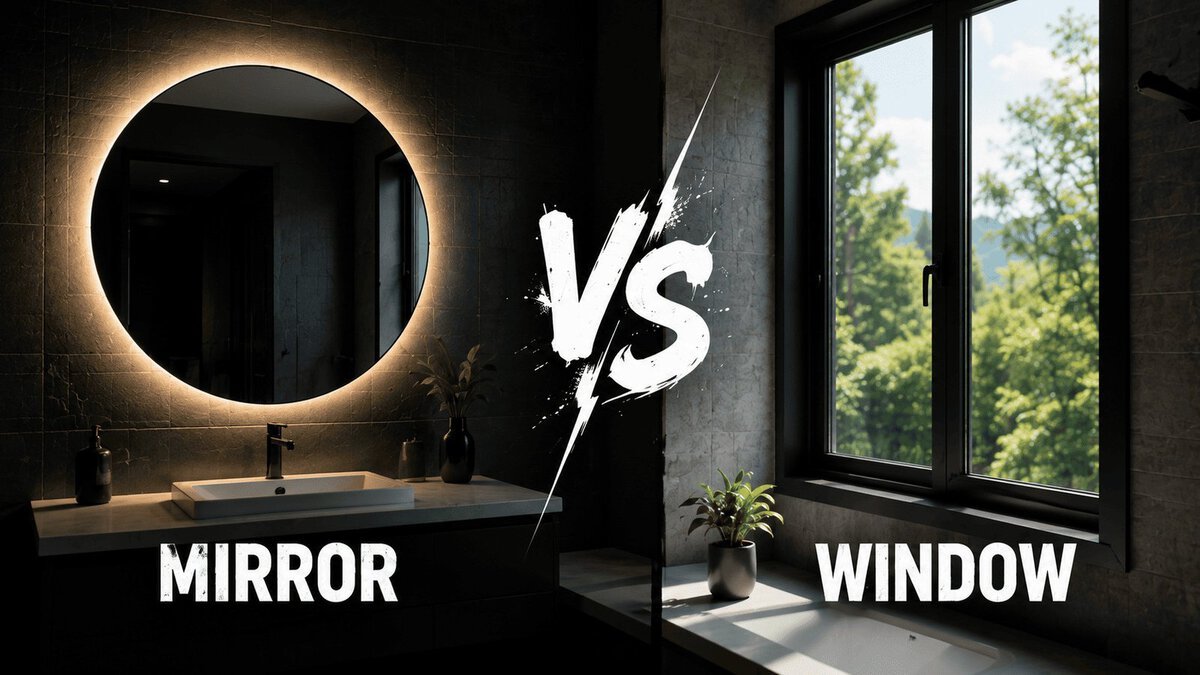
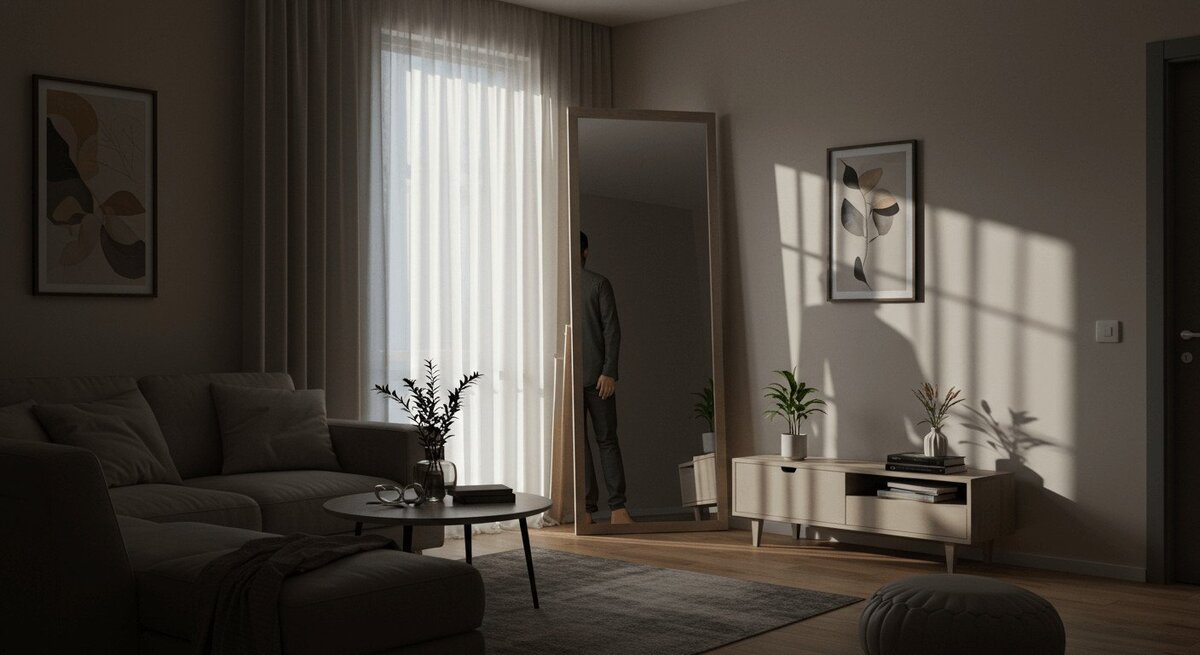
Miroir ou fenêtre ? Vous vous sentez en confiance en vous regardant dans le miroir de la salle de bain.. Puis vous surprenez votre reflet près d’une fenêtre et vous ressemblez soudain à une autre personne.. Which one is actually telling the truth?
A mirror and a window do two completely different jobs. A mirror bounces light back at you, showing a flipped version of your face. A window doesn’t show you anything at all — it just lets natural light into the room. That natural light is close to “full spectrum” (meaning it contains a balanced mix of all light colors), which is why it’s considered the most honest light for judging how you actually look. A mirror’s accuracy depends entirely on its glass quality and whatever light happens to be hitting it.
Décrivons exactement comment chacun fonctionne, what that difference actually means for your reflection, and how to get the best of both.
What’s the Difference Between a Mirror and a Window?
This sounds like an obvious question, but mixing these two up is more common than you’d think — and clearing it up is the foundation for everything else in this article.
A mirror is a reflective surface — it bounces light back and creates a flipped image of whatever is standing in front of it. A window is just an opening that lets light pass through. It doesn’t reflect anything or create any image at all. Autrement dit: a mirror shows you something (a reversed version of your face). A window shows you nothing — it just supplies the light that lets you see everything else clearly, including yourself in a nearby mirror.
Here’s a simple way to picture it. A mirror is like a friend holding up a photo of you and flipping it left to right before showing it back to you. A window is more like someone opening a curtain — it doesn’t show you a picture of anything, it just lets more light into the room. This is why people say “I look better near the window.” They’re not actually looking at the window. They’re looking at a mirror (or just their own skin and clothes) under window light, which is dramatically different from a regular bathroom light bulb.
How Do Mirrors and Windows Actually Work?
Now that the basic idea is clear, it helps to understand what’s physically happening with each one — because that explains exactly why your reflection changes so much depending on which one you’re near.
A mirror works through reflection: light bounces off a shiny, silver-backed piece of glass at a precise angle, which flips the image left to right. A window works through transmission: light just passes straight through a clear pane of glass with nothing created or changed — it simply lights up whatever’s in the room, including you. A mirror placed near a window gets the benefit of both: it reflects your face, and the window provides the best possible light to reflect.
A mirror’s reflection quality comes down to its glass thickness and the silver layer behind it. Bon marché, thin glass (less than 5mm) with a low-quality backing can warp your image slightly — like looking through a slightly bent piece of plastic — and you’d never notice because you have nothing to compare it to. A window’s “qualité” is about something completely different: how much usable daylight it lets in, which depends on its size, which direction it faces, and what time of day it is. This is exactly why interior designers often plan a bathroom around the window first, then position the mirror to make the most of that light — instead of treating the two like separate, unrelated pieces of furniture.
Why Is Natural Window Light Considered the Most Accurate?
If you’ve ever heard a makeup tutorial say “do your makeup near a window,” there’s actual science behind that advice — not just a stylistic preference.
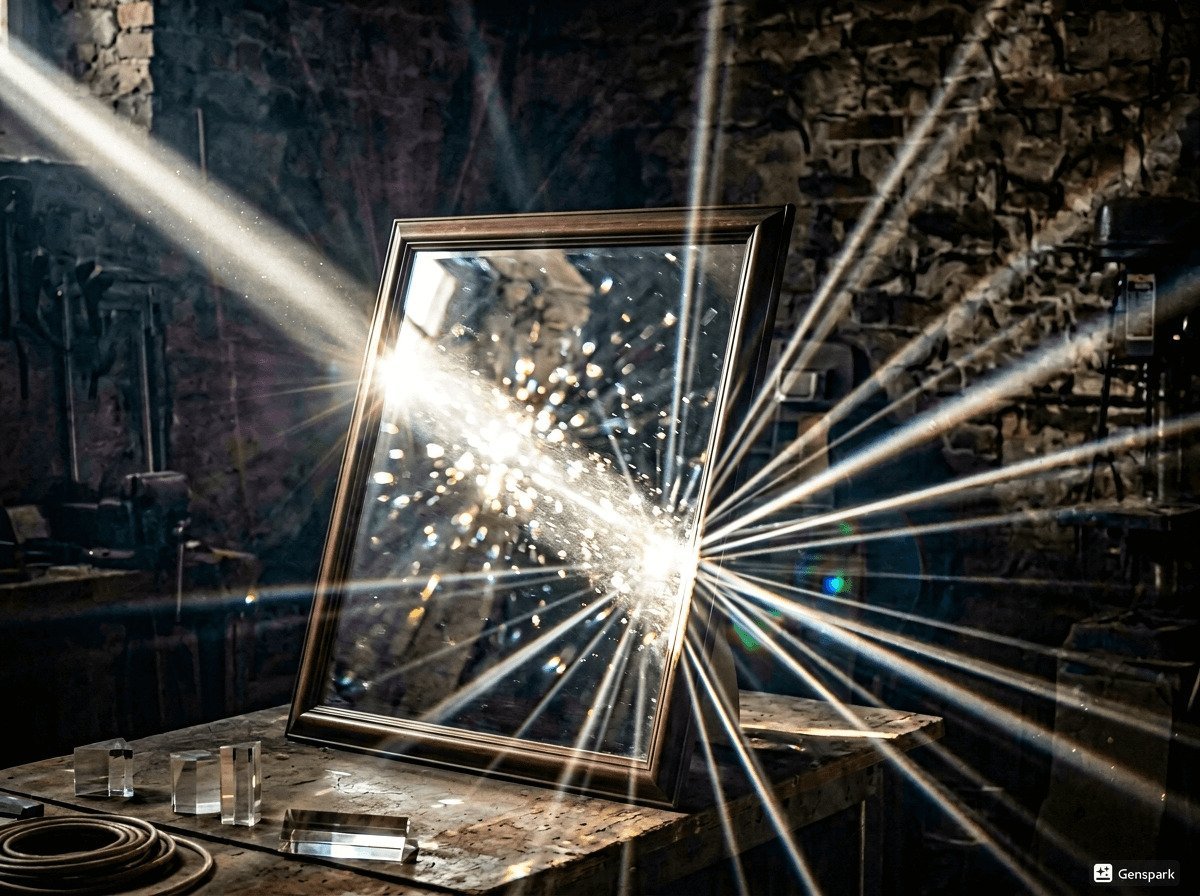
Natural daylight contains a full, balanced mix of all light colors, without artificially warming or cooling your skin tone the way most indoor light bulbs do. This makes it the gold standard for accurately judging skin tone, checking makeup, and seeing your overall appearance honestly. Indoor lighting, d'autre part, often skews warm and yellow (like a typical bulb) or comes from an uneven angle — which can hide or exaggerate features depending on where you’re standing.
Photographers, makeup artists, and skin doctors all rely on daylight for the same reason: it’s the most “honest” light available, without any artificial color bias pulling things one direction or another. A warm yellow bulb might flatter you by softening redness and blemishes, while a harsh fluorescent tube might exaggerate every shadow and imperfection. Neither one is accurate — they’re just biased in opposite directions, like two friends who each only tell you the good or the bad. Daylight sits right in the middle, which is exactly why it’s the reference point used in photography, retail lighting, and skincare checks.
Why Do You Look Better Near a Window Than Under Indoor Lights?
This is one of the most common things people notice — and once you understand why it happens, it stops feeling like some mysterious phenomenon.
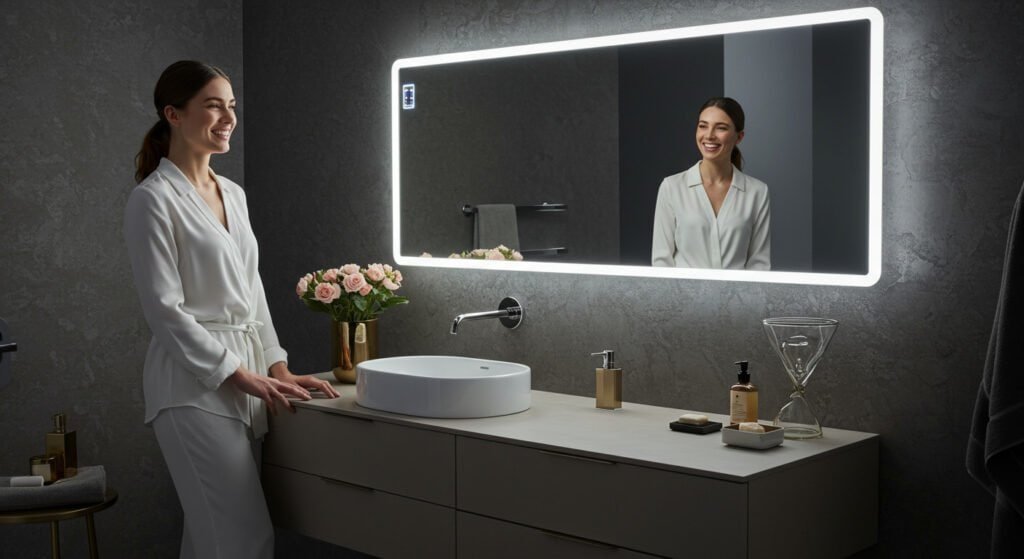
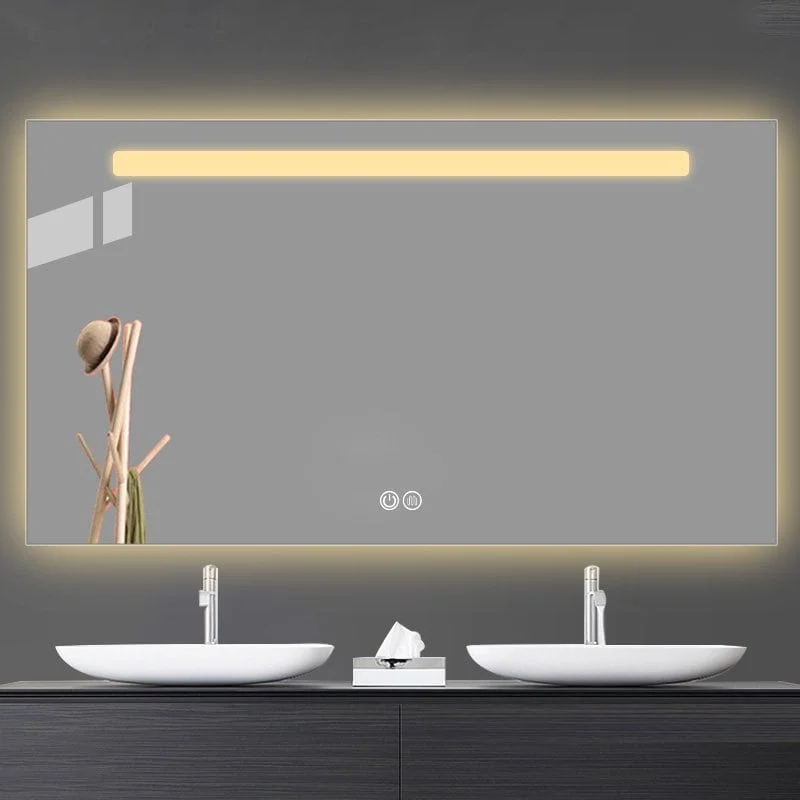
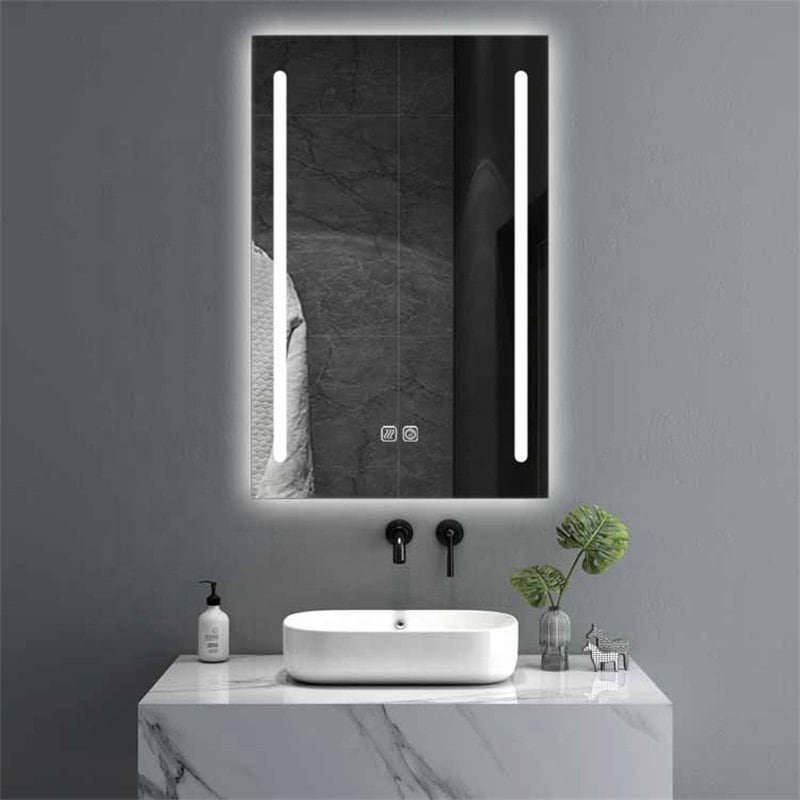
You look better near a window because natural light spreads evenly across your face from a wide source, which minimizes harsh shadows. A bathroom ceiling light, d'autre part, shines straight down and creates unflattering dark patches under your eyes, nez, et le menton. Window light comes from more of a side or front angle and wraps around your features more naturally — which is the exact same principle that a backlit mirror or lighted bathroom mirror is designed to copy.
Think about the last time you were on a video call sitting near a window versus sitting under an overhead light — the difference is usually huge. Overhead lighting is basically the worst possible angle for a face, because it casts shadows downward and makes under-eye circles and texture look much more obvious, almost like someone is shining a flashlight down at you from above. Window light comes in roughly at eye level, spreading out evenly and softening those shadows. This is the exact same trick that top rated LED bathroom mirrors use — by wrapping LED strips around the edges of the mirror instead of relying on a single bulb stuck on the ceiling.
What Is the Mirror and Windows Theory?
Beyond the actual science of light, there’s a popular metaphor that comes up a lot in psychology and self-help writing — and it’s worth explaining clearly since a lot of people search for it.
Le “mirror and windows theory” is a metaphor where a window represents looking outward — at other people, the world around you, and things outside your control — while a mirror represents looking inward, at your own behavior and choices. The idea is that personal growth means balancing both: using a “window” mindset to understand what’s happening around you, et un “miroir” mindset to honestly look at yourself.
This idea shows up a lot in leadership and self-improvement writing. The basic version goes: people who handle things well tend to “look out the window” when something goes right (giving credit to others or to good circumstances) et “look in the mirror” when something goes wrong (taking responsibility instead of blaming someone else). People who struggle with self-awareness tend to do the opposite — taking credit through the mirror and blaming through the window. This metaphor has nothing to do with actual optics or light — it’s just borrowing the idea that windows show you the outside world and mirrors show you yourself, and applying that to how people think.
Is a Mirror Opposite a Window Bad in Feng Shui?
This question comes up a lot in home design discussions, so it’s worth answering clearly and without judgment either way.
In traditional Feng Shui, a mirror placed directly opposite a window is considered unlucky, because it’s believed to bounce good energy — and along with it, wealth and good fortune — straight back out of the home before it has a chance to settle in. Some Feng Shui practitioners also believe this setup disturbs sleep if it’s in a bedroom. This is a traditional cultural belief, not a scientific fact, and different schools of Feng Shui have slightly different rules about it.
If you follow Feng Shui, common fixes include angling the mirror so it’s not pointed straight at the window, using curtains to block the reflection sometimes, or placing furniture so the mirror and window don’t directly face each other. If you don’t follow Feng Shui, there’s no actual functional downside — in fact, as covered above, having a mirror across from a window is often genuinely useful, since it bounces extra daylight into the room. Whether you follow the Feng Shui guidance or the practical lighting logic comes down to personal preference and what matters more to you.
How Close Does LED Mirror Lighting Get to Real Window Light?
This is a fair question, especially if you’re trying to decide between a basic mirror and a more expensive LED model.
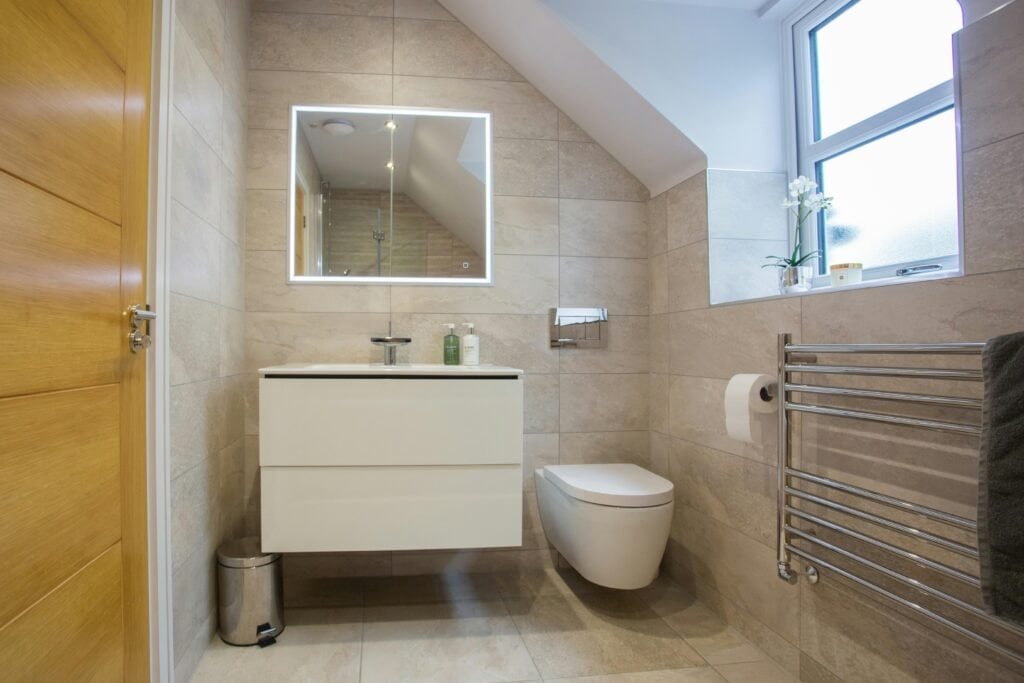
A well-made LED bathroom mirror set to its cooler, whiter setting gets remarkably close to real daylight in terms of color accuracy and evenness — though it usually can’t match the sheer brightness of direct sunlight outdoors. For everyday tasks like makeup, toilettage, and checking your skin, the difference is barely noticeable. For tasks that need extremely precise color matching — like professional photography — natural daylight still has a slight edge.
Here’s a simple comparison of natural window light against a good adjustable LED mirror, focused on what actually matters for daily use:
| What You Care About | Natural Window Light | Adjustable LED Mirror |
|---|---|---|
| Light color | Balanced, fixed | Adjustable — warm to cool |
| When it’s available | Daytime only, depends on weather | Anytime, 24/7 |
| Evenness | Very good, but changes through the day | Very good and stays consistent |
| Coût | Gratuit | One-time mirror purchase |
| Flexibilité | None — you can’t change it | High — switch settings instantly |
| Idéal pour | Color-critical work, photography | Everyday grooming, se maquiller, anytime use |
For almost everything you do in your bathroom day to day, a good LED light mirror vanity setup is genuinely “close enough” — and if your bathroom has no window, it’s really your only practical option.
What’s the Best Lighting Solution for Cloudy Days or Nighttime?
Even a bathroom with a great window loses its main light source for roughly half of every day — which is exactly where the right mirror earns its keep.
For cloudy days and nighttime, the best solution is a lighted vanity mirror with adjustable brightness and color, so you can make up for the missing daylight without overdoing it into harsh, unflattering light. Setting an LED vanity mirror to a neutral-to-cool white tone gets you the closest substitute for an overcast day, while a warmer setting works nicely for a relaxed evening routine.
This is where a feature like détection du corps humain actually becomes genuinely useful instead of just a cool extra — a sensor-activated LED mirror turns on automatically at the right brightness the second you walk in, so you’re not fumbling for a switch in a dim room. Pairing that with anti-fog also solves a related problem: condensation and humidity, which is common in bathrooms during colder months and can fog up both windows and mirrors at the same time. A modern bathroom mirror that handles lighting and fog in one unit removes the two biggest obstacles to seeing a clear, accurate reflection on exactly the days you need it the most.
Foire aux questions
Is a Mirror or a Window More Accurate for Checking Your Appearance?
Neither one is “plus précis” on its own — they do completely different jobs. A window doesn’t show you a reflection at all; it just provides light. A mirror shows you a reflection, but flips it left to right. The most accurate setup combines both: a good-quality mirror positioned to take advantage of natural window light, or a comparable adjustable LED mirror if there’s no window available. That combination gives you honest light and a clear, undistorted reflection at the same time.
Is a Mirror Opposite a Window Bad in Feng Shui?
In traditional Feng Shui belief, yes — a mirror directly facing a window is thought to bounce good energy (and good luck) straight back out of the house. This is a cultural and symbolic belief, not a safety concern or a scientific fact. From a purely practical lighting standpoint, a mirror across from a window is often genuinely helpful, since it bounces extra natural light deeper into the room.
What Is the Mirror and Windows Theory?
It’s a popular metaphor used in psychology and self-help writing: a window represents looking outward at other people and the world, while a mirror represents looking inward at your own choices and behavior. The idea encourages balancing both — using a “window” mindset to understand what’s happening around you, et un “miroir” mindset to honestly take responsibility for your own actions.
Why Do I Look Better Near a Window Than Under My Bathroom Light?
Because natural window light is more even and balanced in color, and it usually comes from a more flattering angle than a single overhead bathroom bulb. Ceiling lights cast shadows downward under your eyes and chin; window light is softer and spreads out more evenly. A lighted bathroom mirror with LED strips placed around the frame — instead of one bulb on the ceiling — is specifically designed to copy that same even, front-facing kind of light.
Conclusion
A window gives you honest light; a mirror reflects it. No window? A good adjustable LED mirror is the closest everyday substitute — accurate, flattering, and ready any time you need it.
Reach out to Josie at[email protected].
- Pour apprendre à choisir le bon miroir de salle de bain, cliquez ici.
- Pour apprendre à installer un miroir, choisissez ici.
- Pour apprendre à choisir le miroir de bonne taille, cliquez ici.
- Pour apprendre comment les miroirs sont fabriqués ici.
- Cliquez ici et vous apprendrez pourquoi nous avons l'air mieux dans les miroirs.
- Cliquez ici, vous découvrirez le haut 10 fabricants de miroir LED pour 2024.
- Cliquez ici pour découvrir pourquoi ma lumière miroir de vanité ne s'allume pas?
- Découvrez quelle est la taille du miroir de salle de bain? Cliquez ici
- Cliquez ici si vous ne savez pas comment nettoyer votre miroir
- Pour savoir comment réparer le miroir du capteur tactile ne fonctionne pas, cliquez ici
- Découvrir 10 Problèmes de miroir de salle de bain LED commun Cliquez ici
À la recherche de miroirs de salle de bains LED personnalisés de toutes tailles, forme, ou finir? Contactez Josie à [email protected]. Avec 20 années d'expérience dans l'exportation de miroirs en Amérique du Nord, Amérique du Sud, le Moyen-Orient, et Afrique du Nord, Hixen rend le sourcing simple et fiable.