








|
گرفتن شما تثلیث صوتی بازیکن آماده ...
|
آیا در آینه بهتر به نظر می رسیم یا در زندگی واقعی؟? آینه را چک می کنی و فکر می کنی, “من امروز خیلی خوب به نظر میرسم” Then someone tags you in a photo and you want to delete it immediately. Why does that keep happening — and whose fault is it?
Most people look better in the mirror than in photos — and there’s a real reason for it. Your mirror shows a flipped version of your face (left and right are swapped), which is the version you’ve grown up seeing every day. Photos show your face the way everyone else sees it. Neither one is lying to you. The difference comes down to how mirrors work, how cameras work, and how your brain processes bot.
Let’s walk through the science, the psychology, and some simple fixes — so you finally understand what’s actually going on, و چه کاری می توانید در مورد آن انجام دهید.
Why Do You Look Different in the Mirror vs. in Photos?
You’ve probably had this experience: you feel great getting ready in the morning, then someone shows you a photo from that same day and you barely recognize yourself. It feels unfair — because it kind of is.
The main reason you look different in photos vs. آینه ها is simple: a mirror flips your face. Everything on your left appears on the right, and vice versa. A camera doesn’t do that — it captures your face the way other people actually see you. Since most faces aren’t perfectly even on both sides, this flip makes a real difference. That’s why something always feels slightly “خاموش” when you look at photos of yourself.
Here’s an easy way to picture it. Imagine you part your hair on the left side. In the mirror, it looks like it’s parted on the right. You’ve been staring at that “right-parted” version of yourself every single day since you were a kid. Your brain has learned that که is what you look like. So when a photo shows the real, un-flipped version of your face, your brain goes, “Wait — something’s wrong.” But nothing’s wrong at all. That’s just the version of you that your friends, your family, and everyone you’ve ever met sees every day. The photo isn’t being mean. It’s just showing you something your mirror never does.
Why Do We Prefer Our Mirror Reflection?
Have you ever noticed that you almost always prefer how you look in the mirror compared to photos? It’s not just you being vain — there’s actually a psychological explanation for it.
We prefer our mirror reflection because of something called the Mere Exposure Effect — which is a fancy way of saying: we like things more when they’re familiar. هزاران بار به انعکاس آینه خود نگاه کرده اید. That version of your face feels natural and right to you. When a photo shows a slightly different version (the un-flipped one), your brain senses something unfamiliar and rates it as less attractive — even though that’s the face everyone else sees perfectly fine every day.
Here’s the interesting flip side of this: studies show that you prefer your mirror image, but your friends prefer your photo image — because that’s the version they’re familiar with. Think about that for a second. The photo version of your face that makes you cringe? That’s the version people around you see every day and think looks completely normal. The version you think looks best in the mirror? Your friends have probably never even seen it. So next time a photo bothers you, remember: you’re critiquing a face that everyone else is totally used to and comfortable with.
Why Do I Look Better in the Mirror Than on My Phone Camera?
This is one of the most searched questions about appearance on the internet — and the answer is honestly more about your phone than about your face.
You look better in the mirror than on your phone’s front camera for three reasons:
(1) Your front camera has a wide lens that stretches and distorts whatever is closest to it — usually your nose;
(2) Mirrors show you at a natural distance, while your phone is held just inches from your face, making everything look bigger and wider than it is;
(3) Many phones add automatic touch-ups that can actually make your skin look oddly smooth or flat instead of natural.
Think of it like this: have you ever seen those photos taken with a fisheye lens, where everything in the center looks huge and stretched? Your phone’s front camera isn’t quite that extreme, but it works on the same principle. It’s a wide-angle lens designed to fit more into the frame — great for group shots or landscapes, but genuinely bad for close-up faces. It makes your nose look bigger, your forehead look wider, and your face look flatter than it really is. None of that is what you actually look like. It’s what a wide lens does to anything close to it — including a basketball, a cat, or a very handsome face. This is a camera problem, not a you problem.
Why Your Brain Prefers Your Reflection
Your brain isn’t just passively showing you what you look like — it’s actively comparing what it sees against a stored image of you. And that stored image comes almost entirely from your mirror.
Your brain prefers your mirror reflection because it has spent your entire life building a mental picture of your face based on what you see in the mirror. Every time you brush your teeth, do your hair, or check your appearance before heading out, you’re updating that mental picture with your mirror image. When a photo shows something slightly different, your brain doesn’t recognise it as well — and things we recognise less feel less attractive to us. It’s that simple.
Scientists call this self-face recognition bias — basically, your brain has a special system just for recognising your own face, and it learned to do that job by looking at mirrors. Here’s a fun way to see this in action: have you ever looked totally fine on a video call, then watched a recording of the same call and thought you looked weird? During the live call, the screen shows a mirror-like flip of your face in real time — your brain recognises it easily. The recording shows the un-flipped version — and suddenly it feels slightly off. Same face, same lighting, same conversation. The only difference is whether it’s flipped or not. That’s how powerful this mirror bias really is.
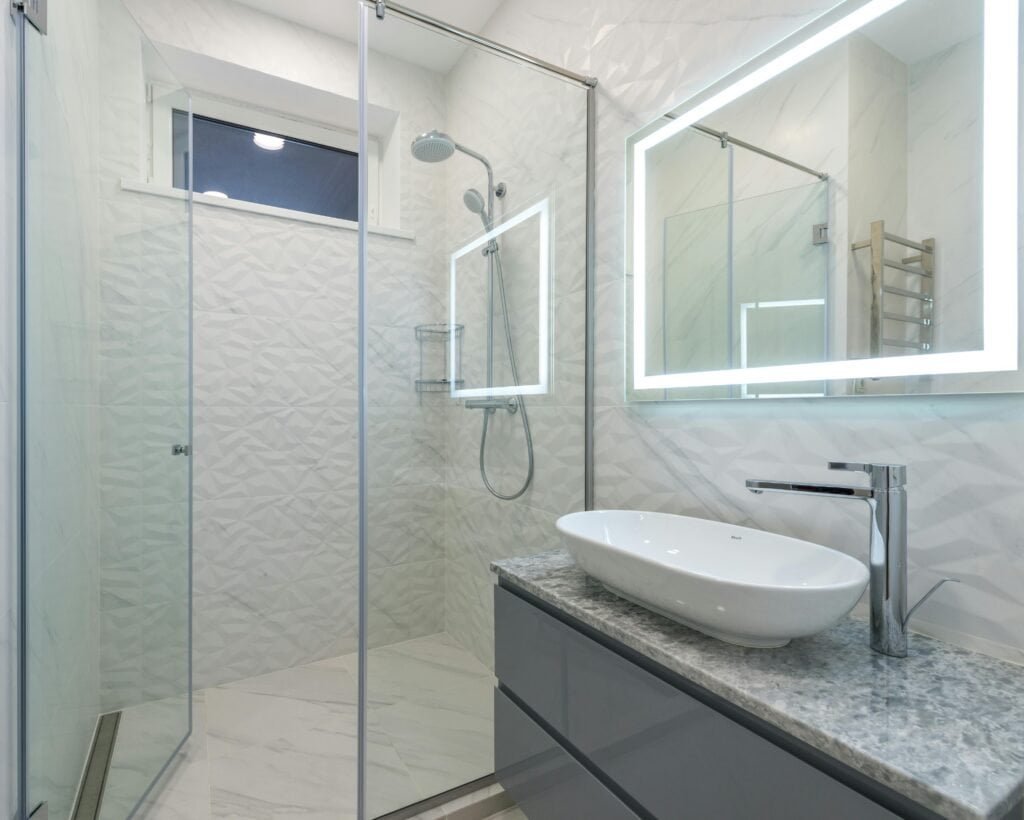
How Cameras Distort Your Reality
Here’s something that might make you feel a lot better about every photo you’ve ever hated: cameras don’t show your face the way your eyes see it. They never have. They’re just tools with physical limitations — and those limitations make almost everyone look a little worse.
Cameras distort how you look in four main ways: در type of lens stretches or compresses your features depending on how wide it is; turning a 3D face into a flat 2تصویر D removes all the depth that makes faces look natural; lighting from the wrong angle creates shadows that don’t exist when someone looks at you in person; وت freezing one split second of your face cuts out all the movement and expression that make you look like you in real life.
Here’s a simple example: professional photographers who take headshots — like for an actor’s portfolio or a LinkedIn profile — almost never use a wide-angle lens. They always use something called a portrait lens, which has a longer focal length. چرا? Because it shows faces the way human eyes naturally see them: proportional, undistorted, and three-dimensional-looking. Your phone’s front camera is essentially the opposite of that. It’s a wide lens pressed close to your face. The result looks nothing like you in person — and nothing like what a professional photo would look like either. That gap between “phone selfie” وت “how I actually look” is almost entirely a hardware issue.
| Camera Type | What It Does to Your Face | Is It Flattering? |
|---|---|---|
| Phone front camera | Widens face, makes nose look bigger | Not really |
| Phone rear camera | Much less distortion, more balanced | Better |
| Portrait mode (any phone) | Simulates a longer lens, softer background | بله |
| Professional portrait lens | Closest to what the human eye sees | Most flattering |
| Wide-angle lens | Stretches and distorts everything close to it | No |
What Is the Most Accurate Way to See How You Look?
So if the mirror shows a flipped version of you and the phone camera distorts your face — what actually shows you the real thing?
The most accurate way to see how you really look is to have a friend take a photo of you from about 6–10 feet away using the rear camera of a phone, in natural daylight. At that distance, the lens distortion almost disappears. You get your un-flipped face (so it’s closer to what others see), with proportions that are much more true to life. Short video clips are also great — they show you in motion, which is closer to how people actually experience you in real life.
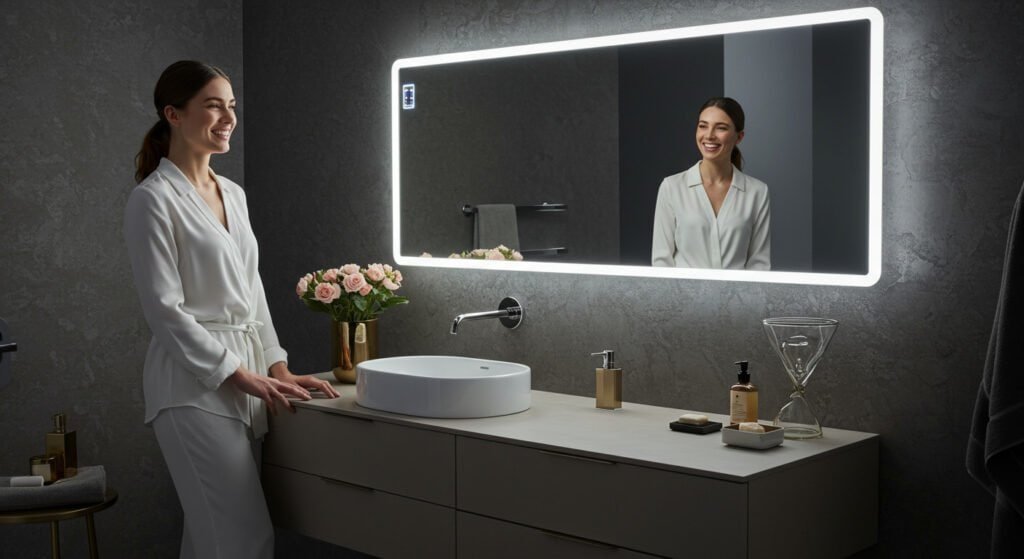
Here’s something worth thinking about: در “real you” isn’t a still image at all. You’re a moving, talking, laughing, three-dimensional person. When someone tells you that you look great, they’re not reacting to a frozen photo — they’re responding to all of you: your expressions, your voice, the way you carry yourself, the energy you bring into a room. None of that shows up in a mirror or a photo. So the most honest answer to “what do I really look like?” is probably: better than any photo has ever made you think. And using a good lighted bathroom mirror with natural-looking light is the best everyday tool you have for seeing yourself clearly.
Why Do Photos Make You Look Worse? The Real Reason
If photos consistently make you look worse than you feel like you look, you’re not imagining it — and you’re not being oversensitive. There are real reasons this happens, and most of them have nothing to do with how you actually look.

Photos make you look worse because several things go wrong at once: the camera lens stretches your face slightly, the 3D shape of your face gets flattened into a 2D image, you’re often lit from above (which creates shadows under your eyes and nose), and your face is frozen in one single moment instead of showing the natural movement and expression that makes you look like yourself. Stack all of these together and you get a photo that feels like a bad version of you — even when nothing is actually wrong.
There’s also a sneaky psychological thing happening when you look at photos of yourself. Your brain is automatically comparing what it sees against your mental mirror image — the version it knows best. And it’s looking for differences. Every tiny asymmetry, every shadow, every strange angle gets flagged and amplified in your mind. But here’s what’s interesting: when your friend looks at the exact same photo, they don’t have that mental mirror image to compare it against. They just see you — and they think you look fine. This is why the photo you hate is almost always described as “a great photo of you” by everyone else. They’re not lying. They genuinely don’t see what you see.
What Is the Best Mirror for Seeing Your Most Accurate Reflection?
Not all mirrors are equal. A bad mirror can actually distort your reflection just enough to throw you off without you realising it — kind of like a very mild funhouse mirror. Here’s what to look for.
The best mirror for an accurate reflection uses thick, high-quality glass (at least 5mm) with a good silver backing that won’t warp your image or turn black at the edges over time. But the glass is only half the story — lighting matters just as much. A lighted vanity mirror or LED bathroom mirror with adjustable brightness and color gives you light that’s close to natural daylight, which is the most honest condition in which to see yourself.
Here’s something most people never think about: a cheap, thin mirror with a low-quality backing can make you look slightly wider, narrower, or uneven — and you’d never know it, because you’d just assume that’s what you look like. It’s like wearing slightly tinted glasses for years and forgetting that colors look different without them.
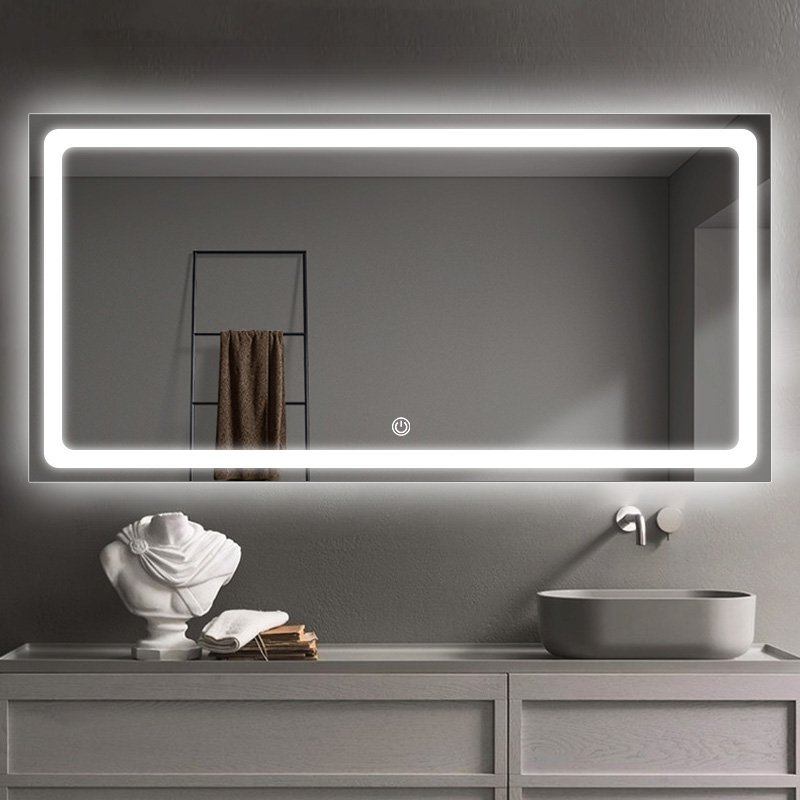
A high-quality bathroom vanity mirror uses properly coated glass that gives you a genuinely flat, accurate reflection. Add a top-rated LED bathroom mirror with three light settings — warm, بی طرف, and cool white — and you have the most honest mirror setup money can buy. Whether you go for a clean backlit mirror, a lighted vanity mirror for your bathroom, or a modern bathroom mirror with a black frame, the combination of good glass and good light is what makes the real difference.
How Does Lighting Change the Way You Look in a Mirror?
You’ve probably noticed that you look completely different in a fitting room versus your bathroom versus outside in sunlight. That’s not your imagination — lighting genuinely changes how your face looks, sometimes dramatically.
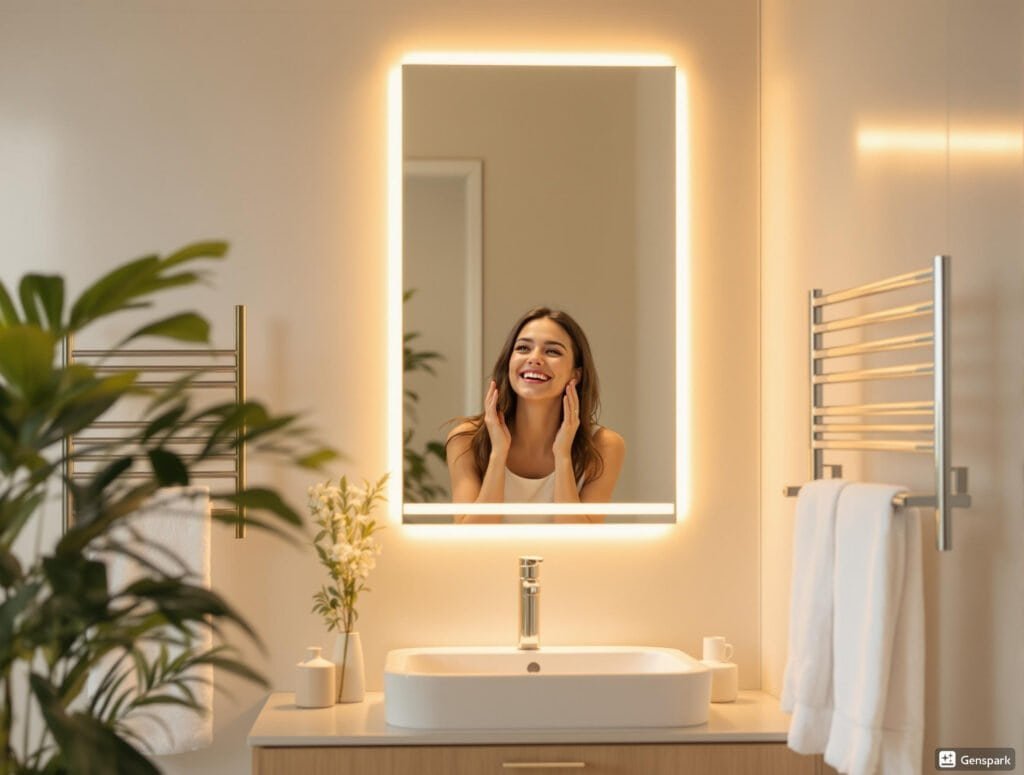
Lighting changes your reflection in two main ways: the color of the light (warm yellow light makes skin look golden and soft; cool white light is sharper and more accurate; natural daylight is the most honest of all) وت where the light comes from (light coming from above your head creates dark shadows under your eyes and nose; light coming from in front of you, like from a lighted bathroom mirror, gives you an even, clear reflection with no weird shadows). Front-facing LED light at face height is the best setup by far.
Think about why selfies taken near a window always look better than selfies taken under a bathroom ceiling light. The window puts soft, even light on the front of your face. The ceiling light hits the top of your head and throws everything below your eyebrows into shadow. It’s not flattering — and it’s not accurate. A modern LED mirror for your bathroom, or a vanity mirror with LED lights built in, works on the same principle as the window: نور را به جای نور در جلوی صورت شما قرار می دهد. The difference in how you look is genuinely surprising the first time you experience it.
| Light Type | Color | What It Does to Your Face | Good For |
|---|---|---|---|
| Old-style yellow bulb | Warm orange | Makes everything look golden, hides details | Cozy vibes, not accurate |
| Standard LED (بی طرف) | Balanced white | Good everyday reflection | Morning routines |
| Cool white LED | Bright, blue-ish white | Very accurate, shows everything clearly | Makeup, نظافت |
| Natural daylight | Balanced natural | The most accurate light that exists | Seeing your true colors |
| آینه LED (adjustable) | Warm to cool, you choose | Best of everything — switch as needed | All-purpose daily use |
What Kind of Mirror Shows You the Best Version of Yourself?
Once you understand how glass quality and lighting work together, choosing the right mirror becomes a lot easier. Here’s what the best options actually look like.
The best mirror for seeing yourself clearly and flatteringly combines thick, distortion-free glass with adjustable LED lighting that you can switch between warm, بی طرف, and cool white. Look for an LED bathroom mirror or lighted vanity mirror with glass that’s at least 5mm thick, a brightness slider, and a waterproof rating of IP44 or higher (which means it’s safe in a steamy bathroom). The best frameless bathroom mirrors with built-in backlighting — or wall mirrors with lights around the edge — are consistently the top-rated options for both looks and practicality.
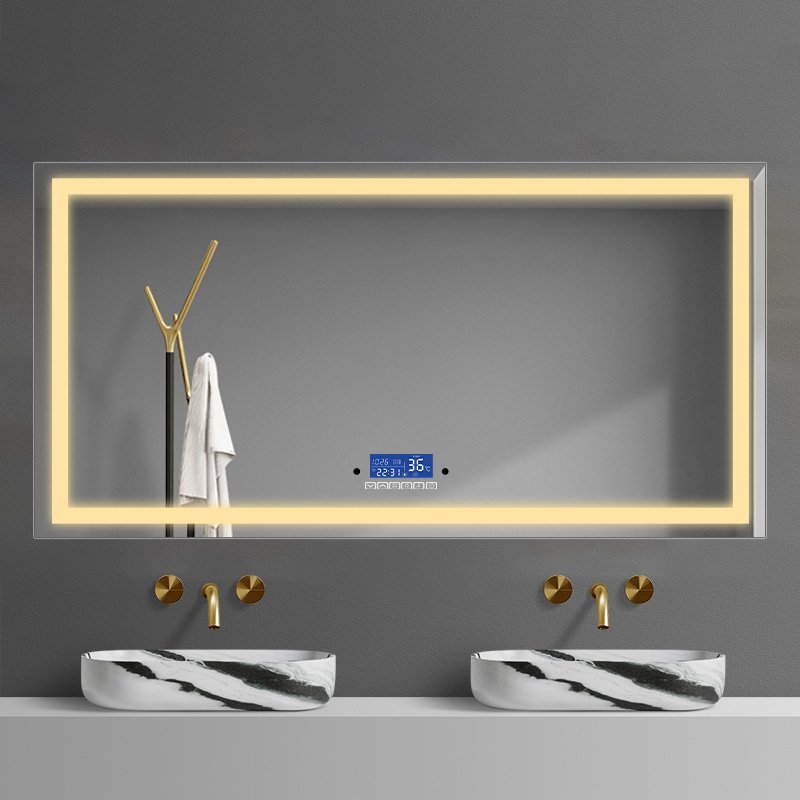
For daily use, the sweet spot is a lighted bathroom mirror set to neutral or slightly cool light — it’s accurate enough to actually see what you’re working with, without being so harsh that every pore looks like a crater. Today’s top-rated LED bathroom mirrors also come with really useful extra features: an anti-fog pad that keeps the mirror clear the whole time you shower, a Bluetooth speaker built into the frame, a touch dimmer so you can adjust brightness with one finger, and a small display showing the time and temperature. Whether you go for a sleek backlit mirror, a rectangular bathroom mirror that spans a double sink, a compact small bathroom mirror for a tight space, or a smart mirror with all the bells and whistles, the LED lighting system is the single feature that makes the biggest difference to your daily reflection.
7 Simple Tips to Look as Good in Photos as You Do in the Mirror
Good news: you don’t need a professional camera or a photographer to close the gap between your mirror self and your photo self. These seven tips work for anyone with a smartphone.
To look better in photos: (1) use your دوربین عقب instead of the front; (2) have someone else take the photo instead of taking a selfie; (3) position the camera slightly above your eye level; (4) stand near a window or a lighted makeup mirror so the light hits your face from the front; (5) take a breath and relax your face a half-second before the photo; (6) turn your head slightly instead of facing straight on; (7) turn on پرتره مد to reduce distortion.
Here’s why each of these works:
1. Use the rear camera. It has a much better lens than the front camera — less distortion, more accurate proportions. The difference in how your face looks is often surprisingly large.
2. Let someone else take the photo. When you take a selfie, your phone is only about 18 inches from your face. That’s way too close for a wide-angle lens — it exaggerates everything. A photo taken by someone standing 6–10 feet away removes almost all of that distortion.
3. Camera slightly above eye level. A camera looking slightly down at you — not a lot, just a little — is a genuinely flattering angle for almost everyone. It makes your neck look longer and your features look more balanced.
4. Use front-facing light. Stand facing a window, or use a lighted makeup mirror or light up vanity mirror behind the person taking your photo. Light coming from in front of your face creates an even, flattering glow with no harsh shadows.
5. Relax your face right before the shot. Most people tense up slightly when they know a photo is being taken — you can see it in the stiffness around the jaw and eyes. A simple trick: take a slow breath, look slightly away, then look back at the camera just as the photo is taken. It resets your expression to something more natural.
6. Turn your head slightly. Facing the camera completely straight-on looks flat and a little stiff. A slight turn of the chin to one side, or a small head tilt, adds depth and looks much more natural and relaxed.
7. Use portrait mode. This feature makes your phone behave more like a professional portrait camera. It softens the background so your face stands out clearly, and it reduces the wide-angle distortion that makes selfies look unflattering. It’s available on almost every modern smartphone.
Does Where You Hang Your Mirror Actually Affect How You Look?
This one surprises a lot of people — but yes, the height and angle of your mirror genuinely changes what you see in it. A perfectly good mirror hung in the wrong spot can give you an inaccurate reflection without you ever knowing.
Mirror placement affects your reflection more than most people realise. A mirror hung too high makes you tilt your head back to see yourself, which creates unflattering angles on your chin and neck. A mirror hung too low makes you hunch forward. The ideal position puts the center of the mirror at roughly your eye level — for most adults, that’s about 57 به 65 اینچ از کف. Even a slight tilt forward or backward changes how your body proportions look in the reflection.
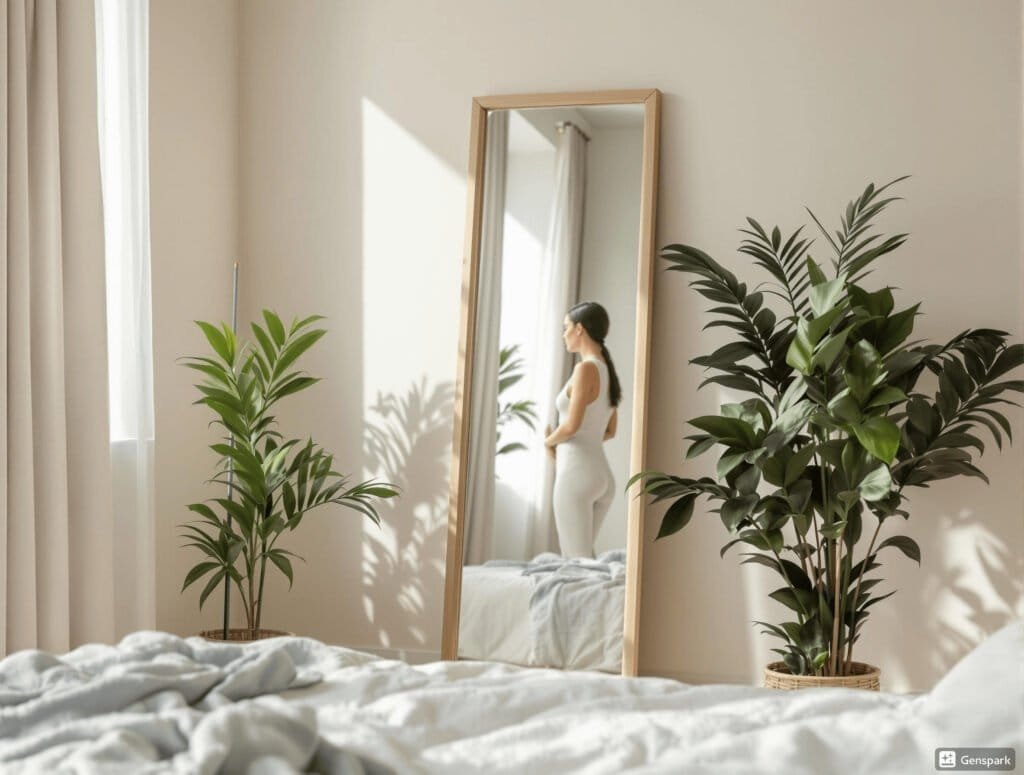
For a bathroom vanity mirror, the standard guideline is to hang it so the bottom edge is about 5 به 10 inches above the countertop, with the center landing at eye level. This isn’t just about aesthetics — it also affects how the light hits your face. When a lighted vanity mirror for bathroom use is hung at the right height, the LED lights shine directly onto your face from the front. When it’s hung too high, the light falls from above — and you’re back to that unflattering overhead-shadow problem. If you’re installing a large rectangular bathroom mirror or a wide custom LED mirror across a double-sink vanity, getting the height right before drilling anything is especially important, because a big mirror makes every degree of tilt more visible.
سوالات متداول
Do We Look Good in Mirror or Real Life?
Most people actually look better in real life than in photos — because real life is three-dimensional, expressive, and includes your personality and energy, which no image can capture. The mirror is close to accurate, but it shows a flipped version of your face. Photos are closer to what others see, but cameras distort proportions and flatten depth. If you want a simple answer: real life wins. The version of you that shows up in person — talking, laughing, moving around — is almost always the best version.
Are You Prettier or Uglier in the Mirror?
You’re not prettier یا uglier — you’re just seeing a different version of your face. The mirror flips your image left to right, and most people find that flipped version more attractive simply because it’s the one they’ve always looked at. It’s a familiarity thing, not a beauty thing. Your friends see your un-flipped face every day and find it just as attractive. Neither version is more “real” than the other — they’re just two sides of the same face.
Should I Trust the Mirror or the Camera?
For getting dressed and doing your hair and makeup, trust the mirror — especially if it’s a good-quality LED bathroom mirror with proper lighting. It gives you an accurate enough sense of how you look for practical daily purposes. For understanding how other people see you, a photo taken from a normal distance with the rear camera in good light is more representative. But honestly? Neither one is the full picture. The best self-assessment you can do is ask a trusted friend — they see you in real life, in three dimensions, with all your expressions and energy included.
Why Does My Face Look Crooked in Pictures?
Because your face isn’t perfectly symmetrical — and nobody’s is. In the mirror, you see your face flipped, so you’re used to your asymmetry appearing on one particular side. When a photo shows the other side, your brain reads it as “crooked” because it looks different from what you expect. It’s not actually crooked — it’s just the side you’re less used to seeing. Wide-angle front cameras can also genuinely exaggerate asymmetry by distorting whatever is closest to the lens, which makes this effect worse in selfies.
How Can I Make My Selfies Look More Like My Mirror Image?
The easiest trick: flip your selfie horizontally after you take it. Almost every phone’s photo editor can do this in one tap, and apps like Snapchat and Instagram have the option too. The flipped version shows your mirror face — the one your brain is most used to — and it usually feels much more “right.” Beyond that: switch to the rear camera, have someone else take the photo, stand farther away, and use portrait mode. All of these help close the gap between what you see in your bathroom mirror and what the camera captures.

The Final Takeaway: Learning to Accept the Real You
Here’s the honest truth: no mirror and no photo is showing you the complete picture.
Your mirror shows a flipped version of your face — familiar, but not quite what others see. Photos show the un-flipped version, but they’re flat, frozen, and distorted by the camera lens. Other people’s view of you is three-dimensional and real — but filtered through their own perspective. None of these is the full story.
The version of you that actually matters — the one that makes an impression on people, the one they remember, the one they like — is the version that shows up in real life. It includes the way you smile when something’s genuinely funny. The way you light up when you’re talking about something you care about. The way you carry yourself when you walk into a room. That version of you can’t be captured in a mirror or a photo. And that’s the version that other people are actually responding to when they think you look great.
اینقدر: stop judging yourself by still images. Use a good quality lighted bathroom mirror with proper LED lighting to get a clear, honest view when you’re getting ready. Understand that the gap between your mirror image and your photos is a matter of cameras and physics — not a verdict on how you look. And remember that every single person in your life who has ever found you attractive has been looking at your photo face, not your mirror face — and they clearly like what they see.
If you want to see yourself in the best possible light — quite literally — a good LED bathroom mirror makes a real difference. One with adjustable color temperature, ضد دندان, and proper LED lighting shows you your face the way it looks in natural light: صادقانه, روشن, and flattering at the same time. That’s the setup that makes every morning feel a little better.
پایان
آینه, the camera, and real life all show you something slightly different — and none of them tells the whole truth. Get better lighting, get a good LED mirror, and cut yourself some slack. You look better than you think. Reach out to Josie at[email protected].
- برای یادگیری نحوه انتخاب آینه حمام مناسب اینجا را کلیک کنید.
- برای یادگیری نحوه نصب آینه اینجا را انتخاب کنید.
- برای یادگیری نحوه انتخاب آینه اندازه مناسب اینجا را کلیک کنید.
- برای یادگیری نحوه ساخت آینه ها اینجا کلیک کنید.
- اینجا را کلیک کنید و یاد خواهید گرفت که چرا در آینه ها بهتر به نظر می رسیم.
- اینجا را کلیک کنید در مورد بالا خواهید آموخت 10 تولید کنندگان آینه LED برای 2024.
- اینجا را کلیک کنید تا دریابید که چرا نور آینه غرور من روشن نمی شود?
- دریابید که آینه حمام چقدر باید قد داشته باشد? اینجا را کلیک کنید
- اگر نمی دانید چگونه آینه خود را تمیز کنید اینجا را کلیک کنید
- برای اطلاع از نحوه رفع آینه سنسور لمسی که کار نمی کند اینجا را کلیک کنید
- پیدا کردن 10 مشکلات آینه حمام مشترک LED اینجا را کلیک کنید
به دنبال آینه های LED سفارشی حمام در هر اندازه ای هستید, شکل, یا تمام کردن? با Josie در [email protected] تماس بگیرید. با 20 سالها تجربه صادرات آینه به آمریکای شمالی, آمریکای جنوبی, خاورمیانه, و شمال آفریقا, Hixen منبع یابی را ساده و قابل اعتماد می کند.