








|
Obtendo o seu Trinity Audio jogador pronto ...
|
You look in a mirror every single day — but have you ever wondered why it actually works? How does a mirror reflection explained? Most people never ask, and that gap in understanding leads them to buy mirrors that look great in the store but disappoint at home.
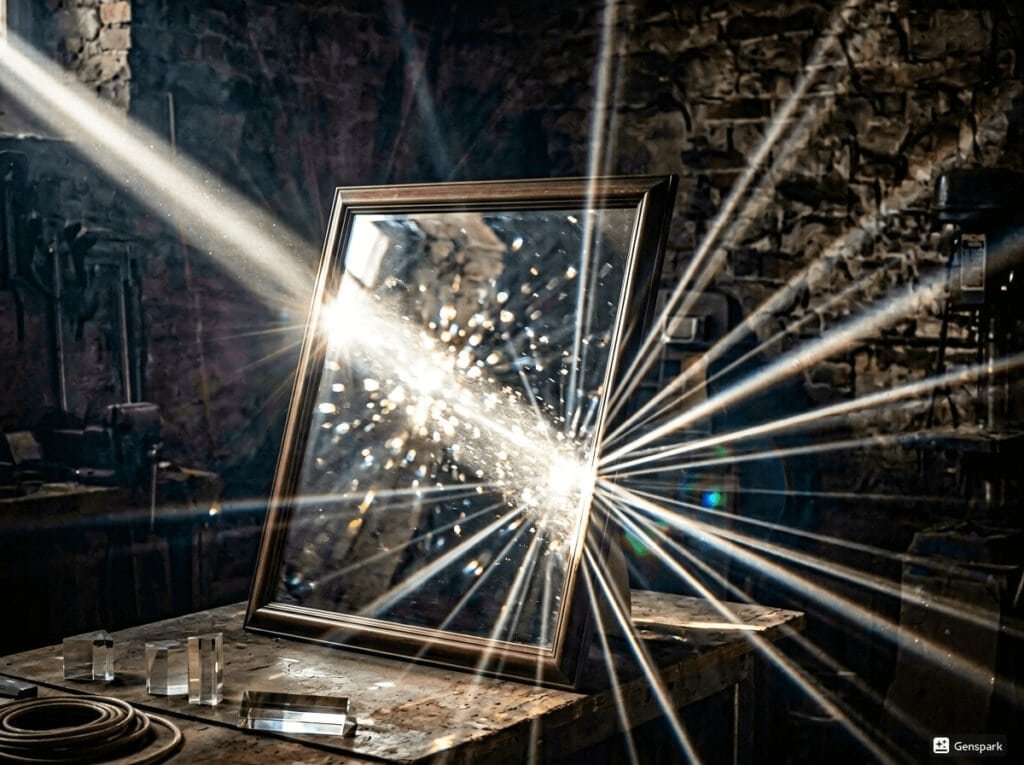
Mirror reflection happens when light bounces off a smooth, shiny surface. When light hits a mirror, it bounces back at exactly the same angle it came from — like a tennis ball hitting a flat wall. Behind the glass, a thin layer of silver or aluminum acts like a perfect bouncing surface for light, sending back a clear image of whatever is in front of it.
That’s the short answer — but the full picture is even more interesting. Let’s dig in.
What Is the Science Behind Mirror Reflection?
Most people think a mirror is just a piece of glass — but glass alone cannot reflect a clear image. The real magic happens behind the glass.
UM espelho de vidro works because of a thin metallic coating bonded to its back surface — usually silver or aluminum. When light hits this coating, instead of passing through or scattering in all directions, it bounces back in one clean, predictable direction. Scientists call this specular reflection — “specular” comes from the Latin word for mirror. Compare this to shining a flashlight at a white wall: the light scatters everywhere and you see no clear image. That’s diffuse reflection. A mirror does the opposite — it sends light back in a perfectly organised way.
The rule that governs this is simple: the angle at which light hits the mirror is exactly the same as the angle at which it bounces back. Imagine throwing a rubber ball at the floor — if you throw it straight down, it comes straight back up. If you throw it at an angle, it bounces away at the same angle on the other side. Light behaves exactly the same way on a mirror surface.
Why does this matter when buying a Espelho do banheiro ou LED mirror? Because the quality of that metallic coating determines everything. A thin or uneven coating produces a slightly wavy reflection — you may notice this in cheap mirrors where straight lines appear to bend. High-quality mirrors use uniform, thick coatings that bounce light back with perfect consistency, giving you a sharp, accurate image every time.
How Does Mirror Reflection Work Step by Step?
It helps to follow the journey of a single ray of light from start to finish — once you see the full path, everything clicks.
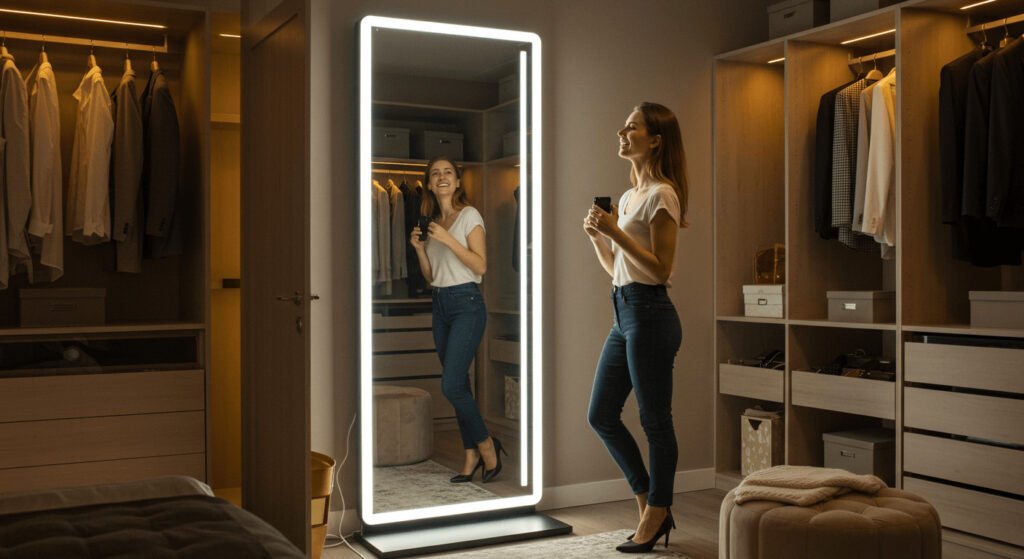
Here is how it works, start to finish: light leaves a source (the sun, a light bulb, or the LEDs in a Espelho de vaidade iluminado), travels in a straight line, hits the mirror surface, bounces back at the same angle, and travels straight into your eye. Your brain then automatically traces that ray back along the path it came from — which is why the image appears to exist behind the mirror, not on its surface. The person you see in the mirror seems to be standing a few feet behind the glass, even though they are standing right in front of it.
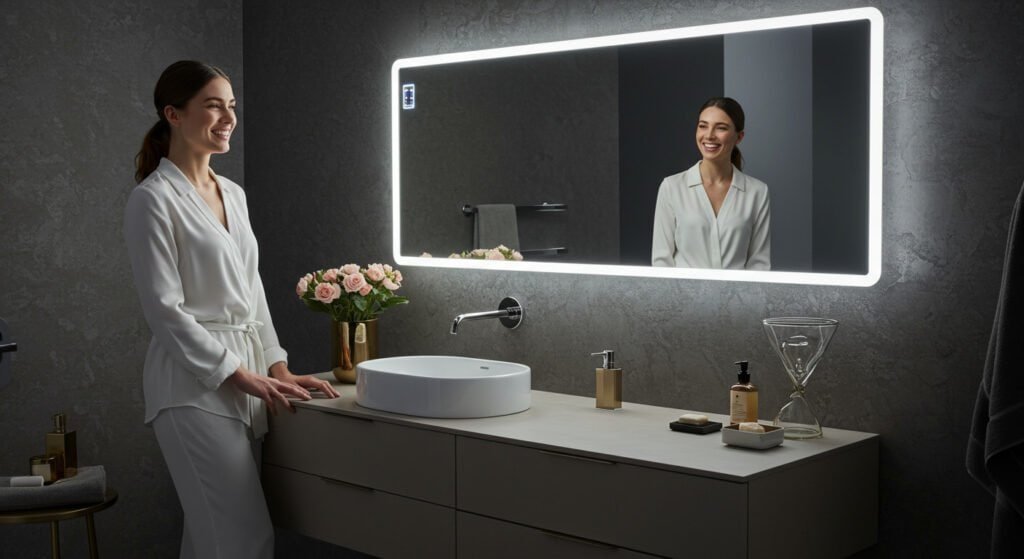
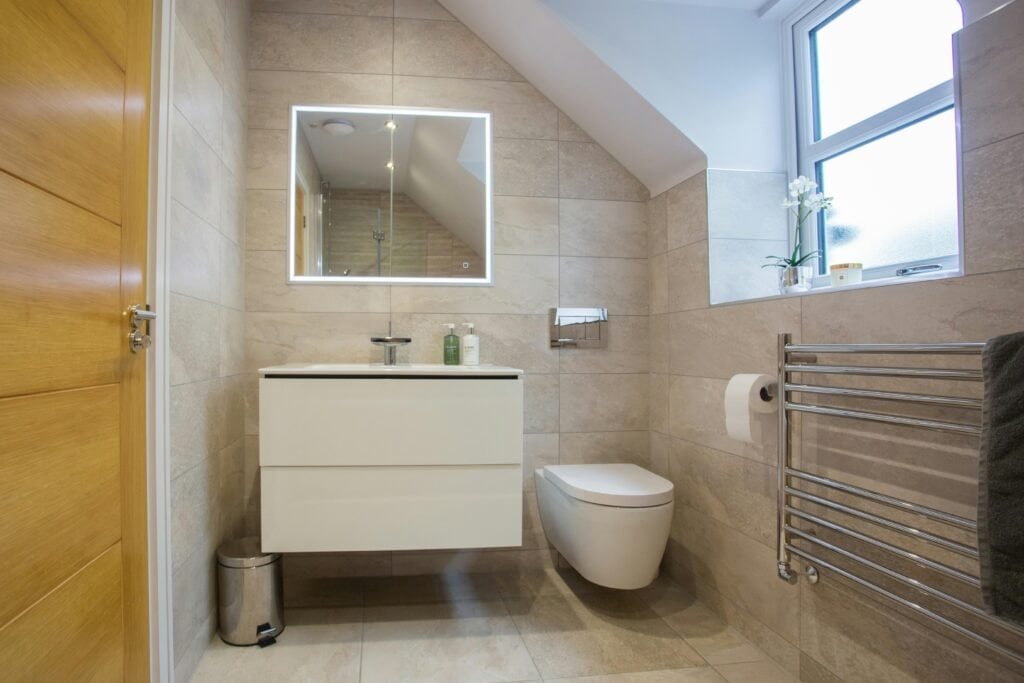
This step-by-step path explains a very practical problem that many people experience: unflattering shadows on their face when standing in front of a bathroom mirror. If the only light source is directly above you — a common ceiling light setup — light hits you from above, creates shadows under your eyes and nose, and the mirror faithfully reflects those shadows back to you. UM bathroom light mirror ou espelho iluminado solves this by placing light around or behind the mirror itself, so light reaches your face from the front and from the sides simultaneously. The reflection you see is brighter, more even, and far more accurate to how others actually see you in natural light.
How Can Mirrors Reflect Things That Are Not Directly in Front of Them?
This one surprises a lot of people: you can often see objects in a mirror that are nowhere near directly opposite it. How?
A mirror reflects anything whose light rays happen to strike its surface — regardless of where that object is positioned in the room. The mirror does not need to be “facing” an object to reflect it. As long as light travelling from that object hits the mirror at some angle, the mirror will bounce it back — and if that bounced ray reaches your eye, you will see the object in the reflection.
Think of it like a snooker table. The cue ball can hit the cushion at an angle and travel to a completely different part of the table. A mirror works the same way with light. The light “bounces off the cushion” — the mirror surface — and travels toward your eye. Your brain follows that ray back and sees the object as if it were inside the mirror, positioned at whatever angle the geometry dictates.
This is exactly why a large espelho de parede com luzes or an oversized espelho de banheiro moderno can make a small room feel dramatically bigger. It is not just reflecting the wall directly opposite — it is capturing light from wide angles across the entire room and sending it all back to your eyes at once. Para room mirror ideas in interior design, this principle is everything: the wider and better-positioned the mirror, the more of the room it visually captures and expands.
Why Can You See Something Behind a Towel — or Around a Corner — in a Mirror?
This is a question that confuses even adults, yet the answer is straightforward once you think about light paths rather than “what the mirror can see.”
A mirror does not “see” anything. It simply bounces light. So when a towel is hanging in front of part of the mirror, it blocks your direct view of what is behind it — but it does not block all the light rays that are travelling from the hidden object toward the mirror surface. Some of those rays travel at angles that allow them to sneak past the towel, hit the mirror, and bounce into your eye. You then perceive the hidden object in the reflection.
A classic mirror reflection experiment you can try at home demonstrates this perfectly. Place a small object behind a book on a table, and position a mirror at a 45-degree angle beside it. You will be able to see the object in the mirror even though the book completely blocks your direct line of sight. The mirror is not seeing around the book — it is simply reflecting the light rays that travel around the edge of the book and happen to hit its surface. This same geometry is why a small bathroom mirror angled slightly on a wall can reveal parts of the room that would otherwise be invisible from your standing position.
What Does God Say About Mirrors?
Not every question about mirrors is scientific — some are philosophical, and this one has a rich and genuinely fascinating answer.
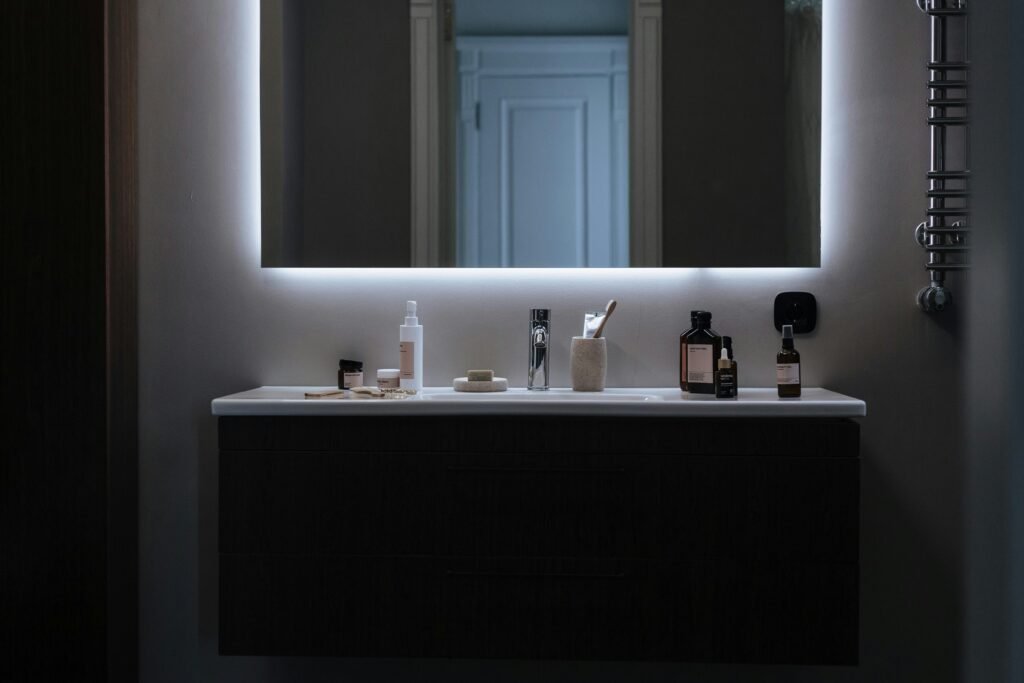
The most well-known religious reference to mirrors comes from the Bible, in 1 Corinthians 13:12, which says we currently see “as through a glass, darkly.” This verse uses a mirror as a metaphor for limited human understanding — the idea that right now, our view of truth and meaning is incomplete and blurry, like looking into an old, imperfect mirror. Full clarity, the passage suggests, comes only later.
This metaphor made perfect sense to its original audience, because mirrors in the ancient world were made of polished metal — bronze or copper — and produced dim, distorted reflections compared to what we are used to today. UM “dark” mirror was not a dramatic image; it was simply everyday reality for most people in that era.
The book of James (1:23–24) also uses the mirror as a symbol of self-deception — comparing someone who hears wisdom but ignores it to a person who glances in a mirror, sees what needs attention, then immediately walks away and forgets. The mirror here represents honest self-examination: the potential for clarity that we sometimes choose not to act on.
Interestingly, the modern LED mirror — with its precise lighting, accurate color rendering, and sharp reflection — is almost the exact opposite of that ancient metaphor. We now have tools that show us ourselves with extraordinary accuracy. What we do with that clarity, as James suggests, is still entirely up to us.
Does Mirror Size and Shape Affect Reflection Quality?
The short answer is yes — and understanding why helps you make smarter decisions about which mirror goes where.
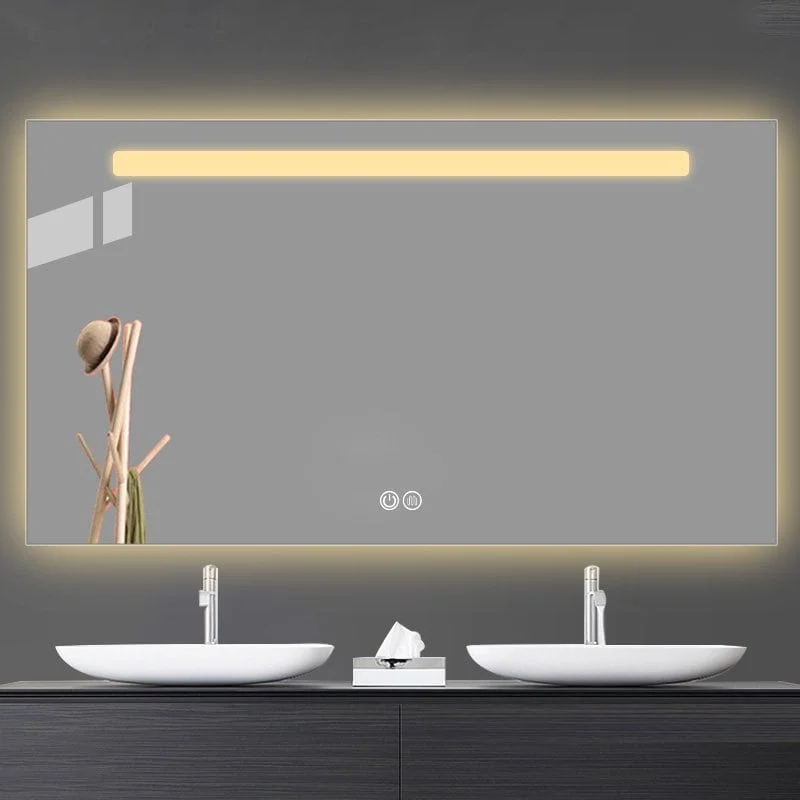
Size is the simpler variable. UM small bathroom mirror shows you less of yourself and less of the room. A larger mirror — whether a full bathroom vanity mirror above a double sink or an oversized espelho de banheiro moderno that spans most of a wall — captures a much wider field of light. It reflects objects at wider angles, makes spaces feel larger, and gives the user more practical coverage during grooming. As a general guide, the mirror should be as wide as or slightly narrower than the vanity or sink unit below it, so the proportions feel balanced rather than cramped or overwhelming.
Shape affects how the reflection behaves across the mirror surface. UM rectangular bathroom mirror gives you consistent, undistorted reflection from edge to edge — the most predictable and practical format for everyday use. Circular or oval mirrors introduce slight softening toward the curved edges, which some people find visually appealing. Custom shapes — such as arched tops or geometric designs, especially popular in mirrors with black frame styles — can reduce the total usable reflective area depending on how much of the surface is non-rectangular, but they add significant visual personality to a space.
For high-volume buyers supplying construction companies or interior fit-out projects, rectangular formats in standard sizes are almost always the safest commercial choice. Custom shapes work well for premium residential or hospitality applications where design differentiation matters.
What Is the Difference Between Regular and LED Mirror Reflection?
For anyone choosing or sourcing mirrors professionally, this comparison goes far beyond aesthetics — it affects how useful the mirror actually is in daily use.
| Recurso | Espelho de vidro padrão | Espelho de LED |
|---|---|---|
| Light source | Whatever light is already in the room | Built-in LEDs around or behind the mirror |
| Shadow on face | Common, especially with overhead lighting | Minimal — light comes from multiple directions |
| Color accuracy | Depends entirely on room bulbs | Controlled and consistent |
| Extra features | None | Defogging, Bluetooth, exibição de temperatura, sensors |
| Energy use | None (passive) | Very low — LEDs are highly efficient |
| Vida útil | Coating-dependent | 50,000+ hours for LED components |
| Customisation | Limited | Tamanho, forma, frame, and functions all adjustable |
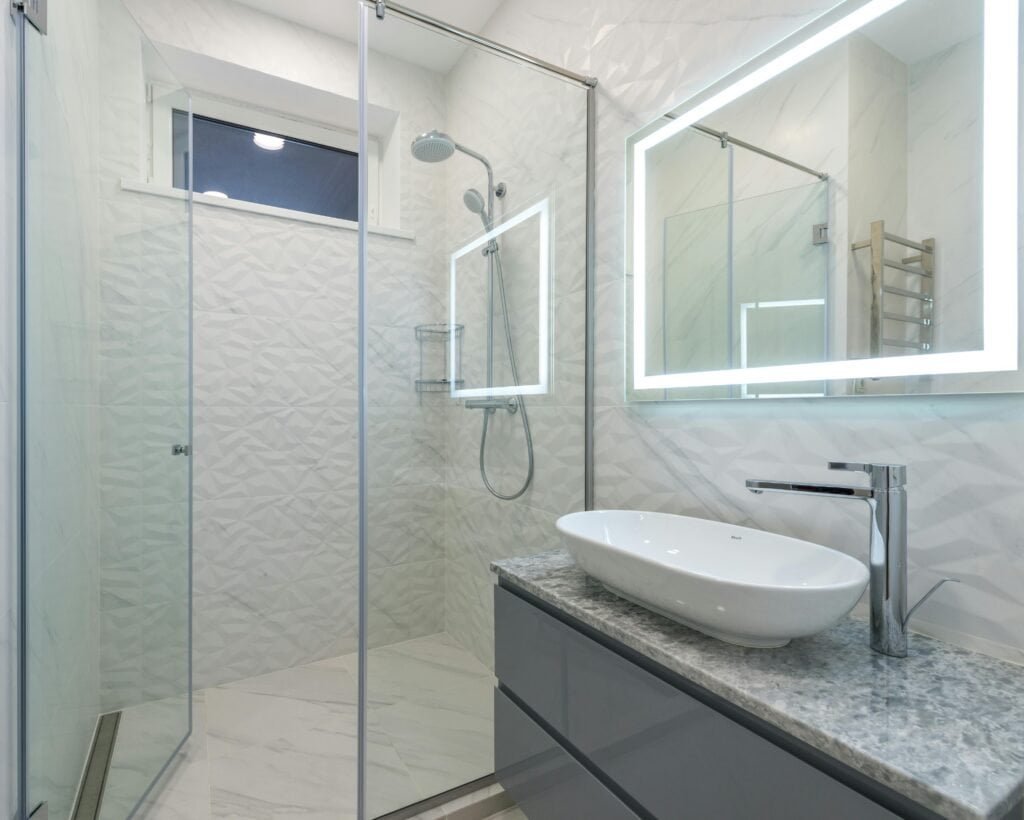
A standard Espelho do banheiro is a passive tool — it simply reflects whatever light the room provides. If your bathroom has a single ceiling bulb, that is what you get: overhead light, harsh shadows, and a reflection that may look nothing like how you appear in natural daylight. UM Espelho iluminado do banheiro ou modern lighted mirror for bathroom use takes control of the lighting equation by building the light source directly into the mirror unit. The result is consistent, even illumination that travels toward your face from the front — which is precisely how photographers light a subject for accurate, flattering results.
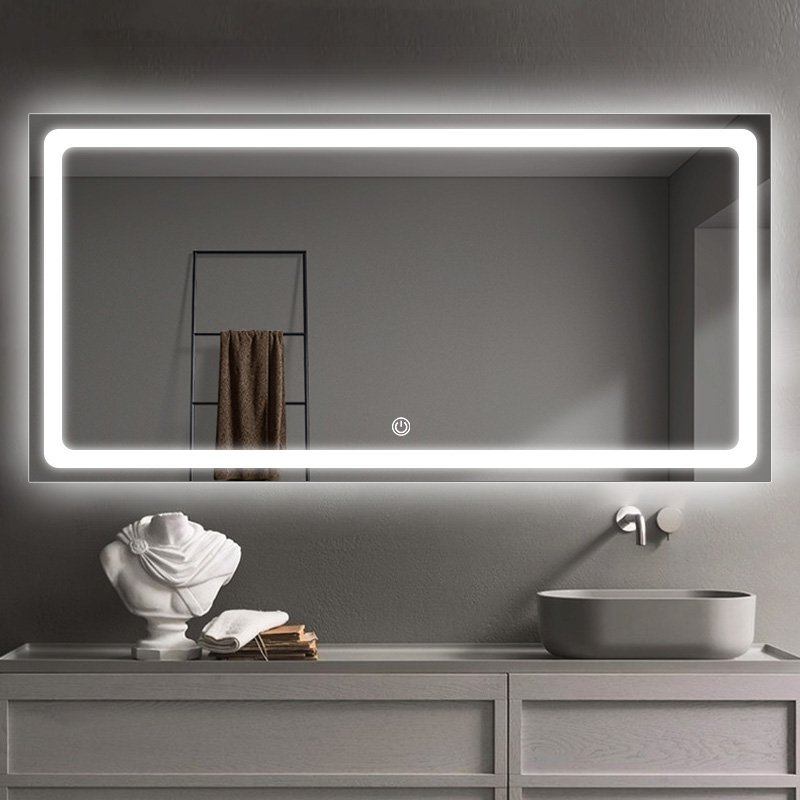
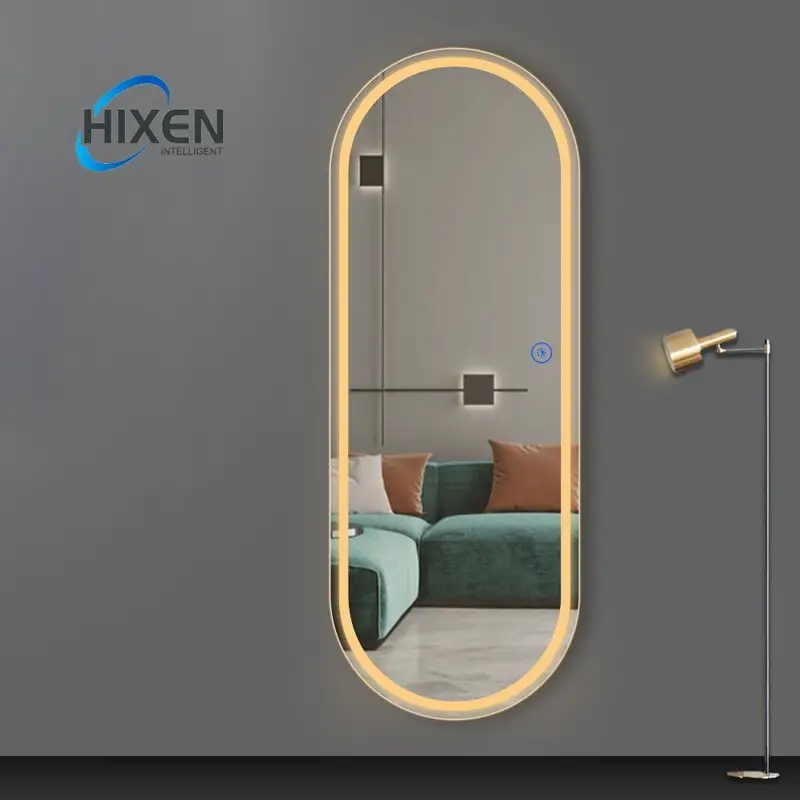
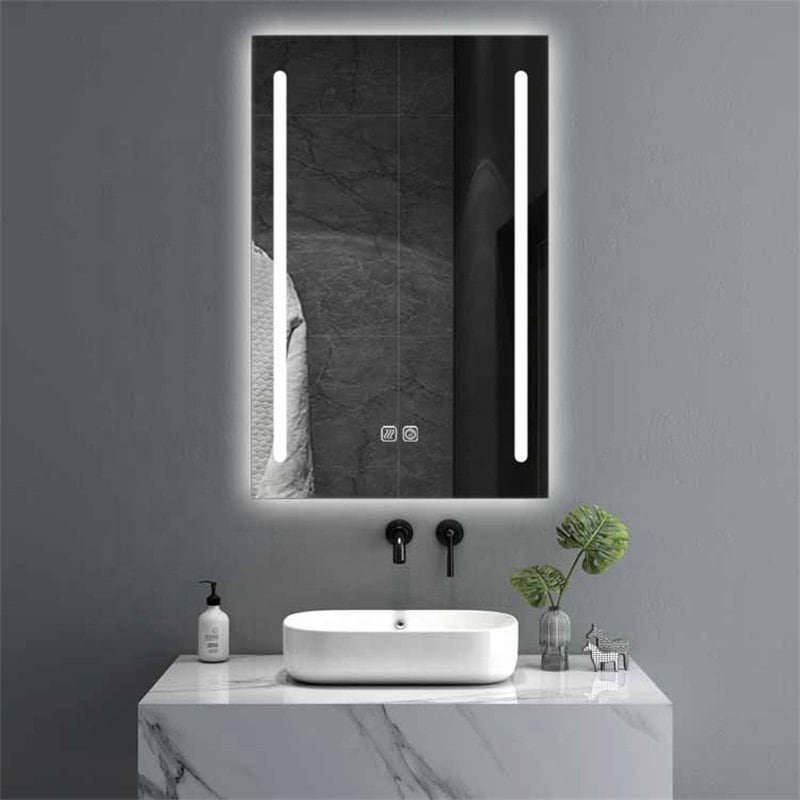
O espelho iluminado is a specific style where LEDs sit behind the glass and glow outward from the edges, creating a soft halo effect. This reduces glare while adding a clean, contemporary visual style. Front-lit designs, por outro lado, direct light more directly toward the user — making them the preferred choice as a espelho de maquiagem iluminado ou Espelho de vaidade iluminado where seeing fine detail and accurate color matters most.
How Does Color Temperature in LED Mirrors Impact What You See in the Reflection?
Color temperature is one of those technical-sounding terms that is actually very simple — and understanding it makes a real difference in choosing the right mirror.
Color temperature describes how “esquentar” ou “cool” a light source appears, measured in units called Kelvin (K). A candle flame is around 1800K — very warm and orange. A clear blue sky is around 10,000K — very cool and blue. Maioria Espelhos de cortesia LED sit somewhere in between, typically offering three settings or a sliding scale from around 3000K to 6500K.
| Temperatura de cor | What It Looks Like | Melhor para |
|---|---|---|
| 3000K – 3500K | Esquentar, golden-white | Relaxed ambiance, bedroom vanity |
| 4000K – 4500K | Clean, neutral white | Everyday bathroom use |
| 5500K – 6500K | Bright, daylight-like | Makeup, detailed grooming, color-accurate tasks |
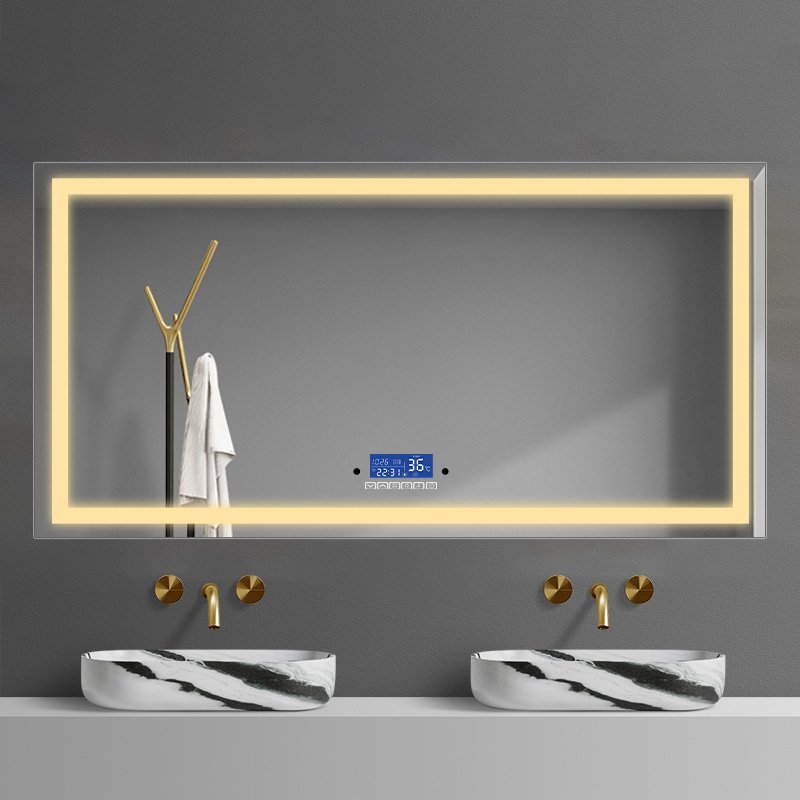
The effect on your mirror reflection of yourself is significant and very practical. Under warm light, skin tones look softer and more golden — pleasant, but not accurate if you are applying makeup that needs to look natural outdoors. Under cool daylight light, the reflection shows you exactly what others see in natural light — every detail, every color, with no flattering filter. UM espelho de maquilhagem com luzes LED that lets you switch between these settings gives users the best of both worlds: comfort when desired, accuracy when needed.
For business buyers sourcing lighted vanity mirrors for bathroom projects — whether for hotels, residential developments, or retail — offering adjustable color temperature is a straightforward way to increase the product’s appeal and reduce post-sale complaints.
What Should Buyers Look for in a High-Quality Reflective Mirror?
Whether you are buying one mirror or one thousand, the same core criteria determine whether a mirror is genuinely good or merely looks good on a product listing.
Coating quality is the starting point. The metallic layer at the back of a espelho de vidro determines how sharp, brilhante, and distortion-free the reflection will be. A simple test: hold a pen tip against the mirror surface. In a high-quality mirror, the reflection of the pen tip appears very close to the actual tip with almost no gap. In a low-quality mirror, there is a noticeable distance between the real tip and its reflection, caused by a thick or uneven glass layer. Any visible waviness when looking at a straight line reflected in the mirror is a red flag.
Certificações protect both buyer and end user. Para Espelho do banheiro LED e vanity lights products sold in North America, UL or ETL listing is the standard. For European markets, CE marking is required. For any mirror used in a bathroom, the IP (water resistance) rating matters — IP44 is the minimum acceptable for bathroom environments, with IP65 recommended for mirrors near shower or wet zones.
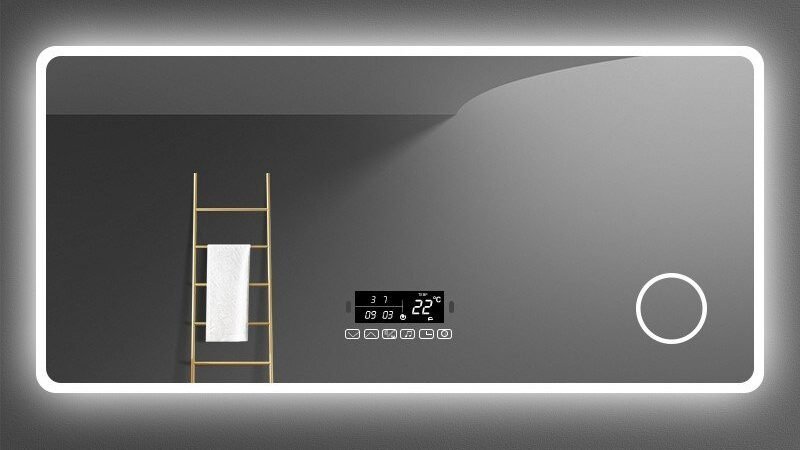
Anti-fog functionality has moved from a luxury feature to an expectation in premium Espelho iluminado do banheiro products. A small heating element behind the glass keeps the surface just warm enough to prevent condensation in steamy bathroom conditions. For buyers supplying hotels, academias, or high-end residential projects, this feature is often the difference between a five-star review and a complaint.
Logistics reliability matters as much as product quality for B2B buyers. A technically excellent mirror that arrives three weeks late causes real commercial damage — missed installation windows, delayed project completions, and strained client relationships. When evaluating suppliers, ask specifically about lead times, pre-shipment inspection processes, and how quality is controlled across production batches, not just on sample units.
Conclusão
Understanding how mirror reflection works is not just interesting — it directly shapes which mirrors perform best and last longest. For custom LED mirror solutions built to your specifications and market, reach out to Josie at [email protected].
- Para aprender a escolher o espelho do banheiro certo, clique aqui.
- Para aprender a instalar um espelho, escolha aqui.
- Para aprender a escolher o espelho do tamanho certo, clique aqui.
- Para saber como os espelhos são feitos, clique aqui.
- Clique aqui e você aprenderá por que ficamos melhores nos espelhos.
- Clique aqui você aprenderá sobre o topo 10 Fabricantes de espelho de LED para 2024.
- Clique aqui para descobrir por que minha luz de espelho de vaidade não acende?
- Descubra quão alto deve ser o espelho do banheiro? Clique aqui
- Clique aqui se você não sabe como limpar seu espelho
- Para descobrir como consertar o espelho do sensor de toque não funcionando, clique aqui
- Descobrir 10 Problemas comuns do espelho do banheiro LED