








|
Conseguir tu Trinidad Audio jugador listo...
|
Pasas junto a un espejo y de repente ves algo detrás de ti, algo que el espejo nunca fue. “frente a.” ¿Cómo es eso posible?? ¿Cómo refleja un espejo algo que no puede ver? ? The answer will change how you look at mirrors forever.
A mirror reflects objects it “can’t see” because mirrors don’t actually see anything — they just bounce light. When light from any object hits the mirror’s surface, the mirror sends that light straight to your eyes. The object doesn’t need to be in front of the mirror — it just needs its light to reach the mirror’s surface.
Still sounds a little mysterious? Let’s walk through it step by step — starting with what actually happens when light meets a mirror.

What Actually Happens When Light Hits a Mirror?
Most people think mirrors are magical. They’re not — they’re just really, really good at bouncing light in a predictable way.
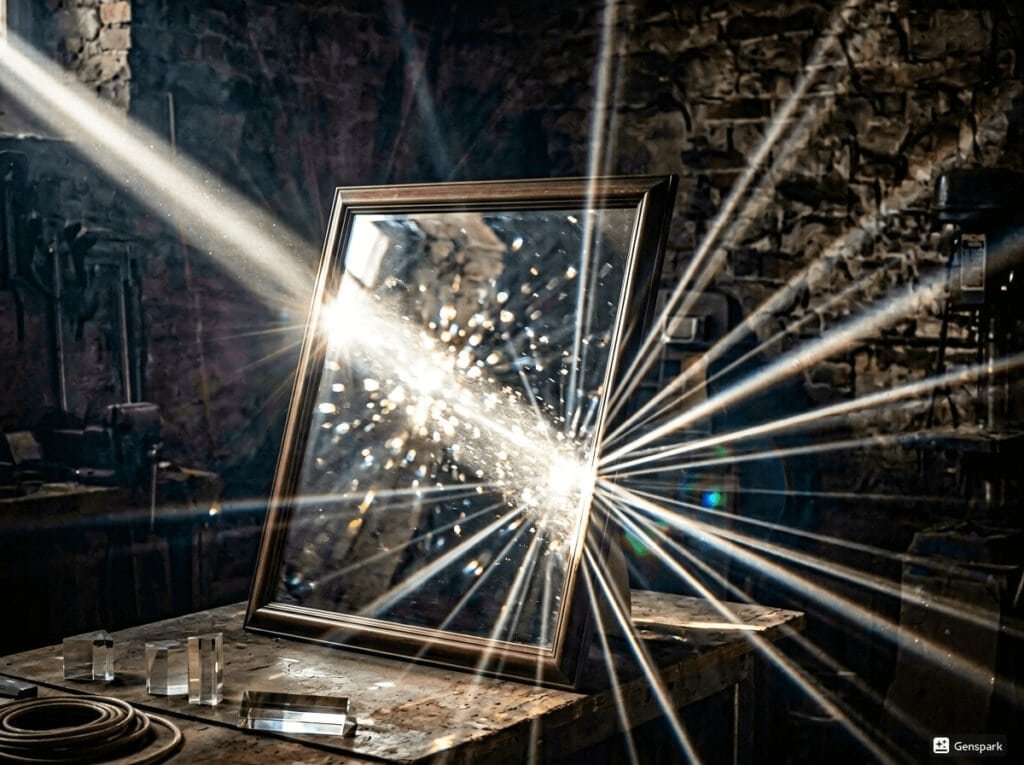
When light hits a mirror, it bounces back at the exact same angle it came from. Think of it like throwing a ball at a wall — the ball bounces back the same way it hit. A mirror does the same thing with light, and that bounced light travels straight into your eyes, forming the image you see.
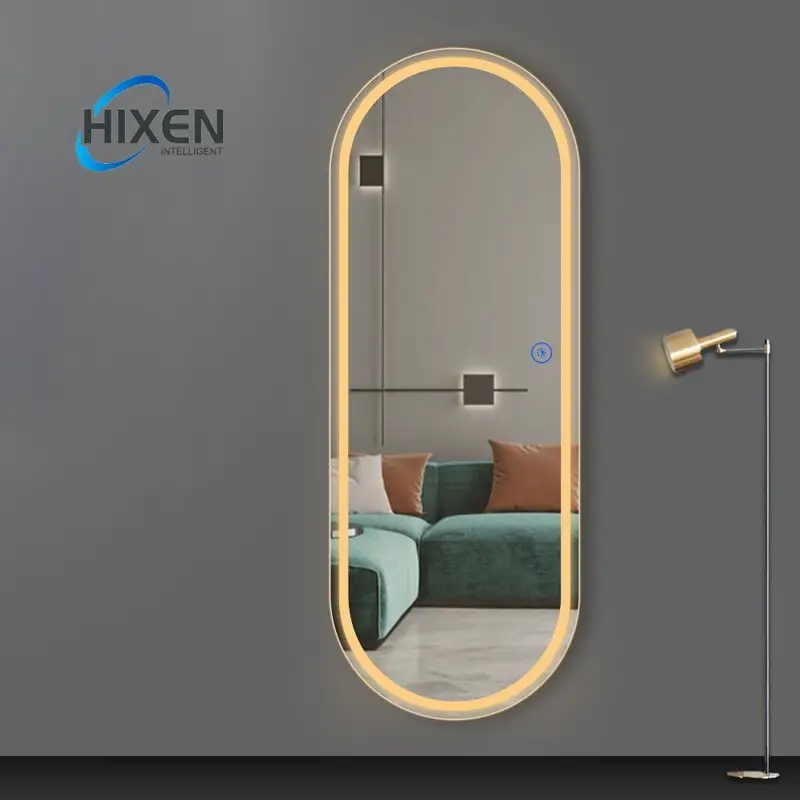
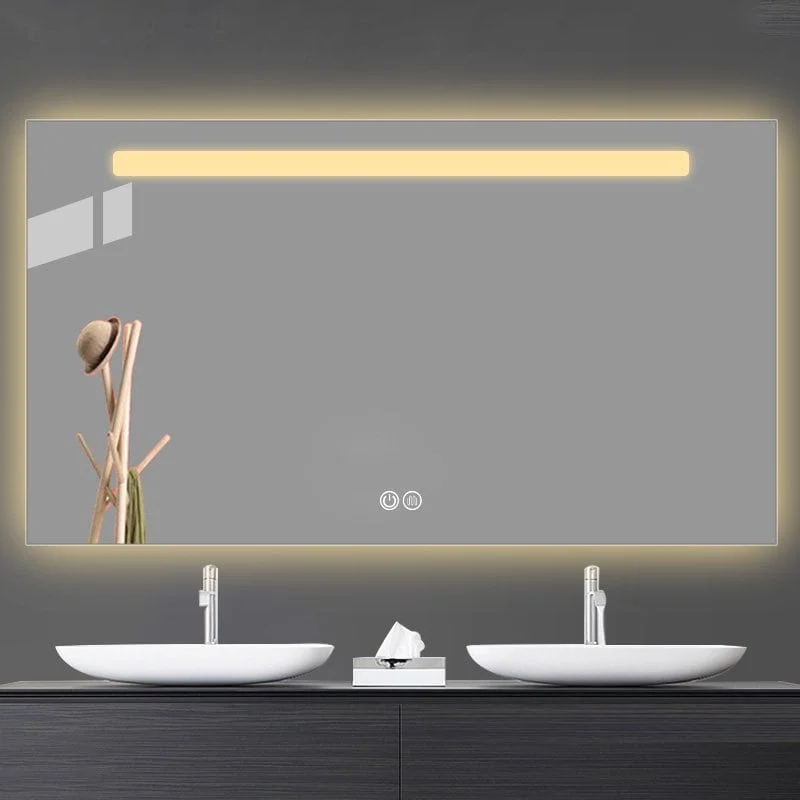
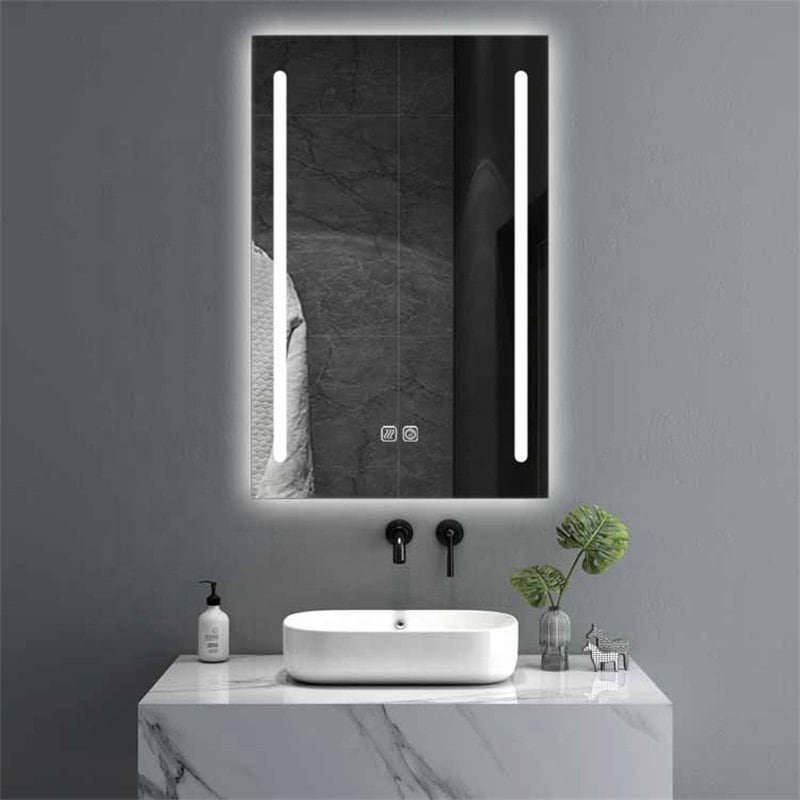
Here’s what’s actually going on behind the glass. Most mirrors — whether a basic espejo de cristal on your wall or a modern Espejo de baño LED — have a super-thin layer of silver or aluminum coating behind the glass. That metal coating is what does the actual reflecting. It’s polished so smooth that light bounces off it in a perfectly organized way, like soldiers marching in formation. Rough surfaces like walls bounce light in random, messy directions (that’s why you can’t see your reflection in a painted wall). But that ultra-smooth metal coating on a mirror keeps every light ray traveling in exactly the right direction. The result? A sharp, claro mirror reflection of yourself — not a blur. The glass in front is mainly just there to protect that metal layer from getting scratched or damaged.
Why Can’t a Mirror Reflect What’s Behind It?
This one’s actually pretty simple once you think about it the right way.
A mirror can only reflect objects whose light actually reaches its front surface. If an object is behind the mirror, its light hits the back of the mirror — not the reflective front. No light reaching the front surface means no reflection. Simple as that.
Imagine you’re holding a flashlight. You can only shine it in the direction it’s pointing — you can’t light up what’s directly behind you without turning around. Objects behind a mirror are in the same situation. They’re sending light out in all directions, but none of that light can get around to the mirror’s shiny front face. So from the mirror’s perspective, those objects simply don’t exist. This is actually really useful knowledge for room mirror ideas and home design. A Espejo de pared con luces placed on the right wall at the right angle can make a small room look twice as big — but only if it’s positioned to catch light from the right direction. Put it in the wrong spot, and you lose all that effect.
How Do Mirrors Reflect Things That Are Blocked?
Wait — if mirrors can only reflect what’s in front of them, how do they sometimes show you things that seem blocked?
Mirrors can reflect “blocked” objects when light from those objects finds another path to the mirror’s surface — bouncing off walls, other mirrors, or sneaking around edges. The mirror just reflects whatever light arrives. It doesn’t know or care where that light came from originally.
Try this simple mirror reflection experiment en casa: stand two mirrors facing each other at a slight angle, then place a small toy to the side. You’ll see that toy reflected in both mirrors — even though neither mirror is directly facing it. That’s because light from the toy bounced off one mirror first, then traveled to the second mirror. Your Espejos de tocador de baño with side panels work exactly the same way. That’s how you can see the back of your hair when you use two mirrors together — the light bounces between them and eventually reaches your eyes from an angle that would normally be impossible. Light is remarkably good at finding paths, and mirrors are remarkably good at redirecting it.
Does the Angle of a Mirror Change What It Reflects?
Short answer: Sí, massively. The angle of your mirror is basically the remote control for what it shows you.
Tilting a mirror even slightly changes the entire reflected image. This is because the mirror bounces light at the same angle it receives it — so shift the mirror, and the whole reflection shifts too. This is why convex mirrors in shop corners can show a wide view of an entire aisle, and why lighted vanity mirrors for bathroom use often feature adjustable angles.
Think about car mirrors. Your side mirrors are angled outward so they capture light from the lanes beside you — not just directly behind. The same logic applies to espejos de baño rectangulares y modern bathroom mirrors en casa. If your bathroom mirror is mounted too high, you’ll see the ceiling instead of your face. Too low and you’ll see the floor. The right mounting height — typically around eye level — ensures the mirror is angled to capture exactly what you need. Even a one or two-degree difference in tilt can make you look taller or shorter in a full-length mirror. Interior designers and store fitting rooms actually use this trick on purpose.
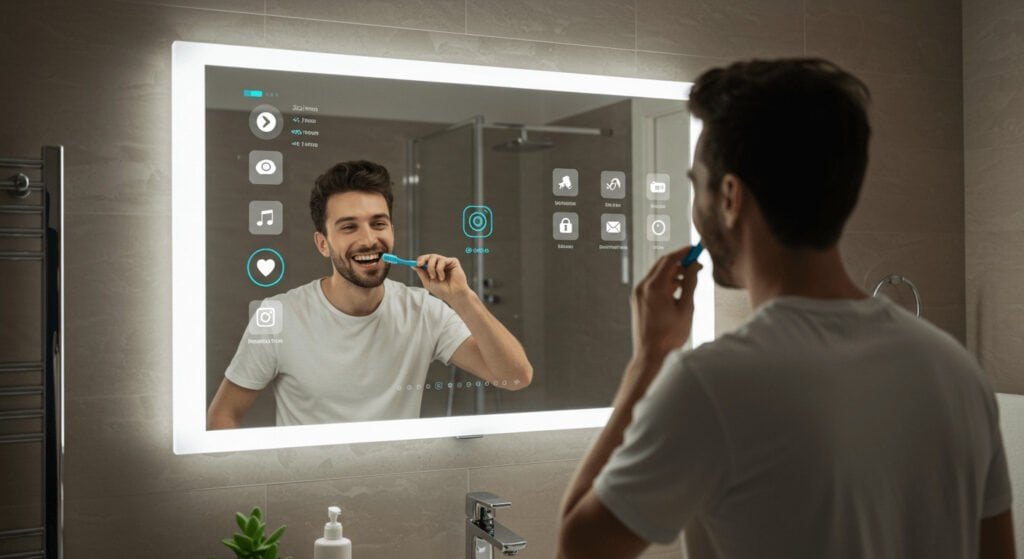
Can a Mirror Reflect Everything?
Mirrors feel all-powerful — but they actually have some pretty clear limits.
No, a mirror cannot reflect everything. Standard mirrors only work with visible light. They can’t reflect objects that are out of their range, surfaces that absorb all light (like matte black), or types of light the human eye can’t see — like heat radiation or ultraviolet rays. What you see in a mirror is always limited by what light is available.
Here’s a simple breakdown:
| What Mirrors CAN Reflect | What Mirrors CANNOT Reflect |
|---|---|
| Visible light (the light your eyes can see) | Infrared light (heat) and ultraviolet light |
| Objects whose light reaches the mirror surface | Objects with no light path to the mirror |
| Indirect light that bounces off other surfaces | Perfectly matte black surfaces (they absorb all light) |
| Wide-angle views with curved/convex mirrors | Objects completely outside the mirror’s range |
| Accurate colors — when lighting is correct | True colors under bad or mismatched lighting |
That last point is a big one. If your bathroom has yellow light bulbs but your Mirror de vanidad LED produces bright white light, the colors in your reflection will look off — your skin tone, your outfit, your makeup. That’s not the mirror’s fault — it’s a lighting problem. This is why lighted bathroom mirrors y LED light mirror vanity units with adjustable color temperature are so popular. Being able to switch between warm (3000K) y genial (6500K) light lets you see yourself accurately in any situation — whether you’re doing makeup, checking an outfit, or just starting your morning routine.
How Can Mirrors Reflect Things Not Directly in Front of Them?
This is one of the most mind-bending mirror facts — and it’s simpler than it sounds.
Mirrors reflect objects that aren’t directly in front of them by catching light that travels at an angle to the mirror’s surface. As long as light from an object reaches the mirror — even from the side — the mirror bounces it back at a matching angle, and your eyes receive it as a visible image.
Here’s a good way to picture it. Imagine rolling a marble across the floor at an angle toward a wall. It bounces off and rolls away at the same angle on the other side. Light does exactly the same thing. So even if a lamp is sitting to the left of your espejo del baño, its light still hits the mirror at an angle and bounces into your eyes. That’s why, in a compact bathroom, a well-placed small bathroom mirror o modern lighted mirror for bathrooms can reflect objects you wouldn’t expect it to. This principle also powers the three-sided design of professional espejos de maquillaje iluminados — the angled side panels capture light from multiple directions, giving you a complete, multi-angle view that a single flat mirror never could.
Why Do LED Mirrors Give Better Reflections Than Regular Mirrors?
You’ve probably noticed that some mirrors just make you look better than others. Here’s the science behind why.
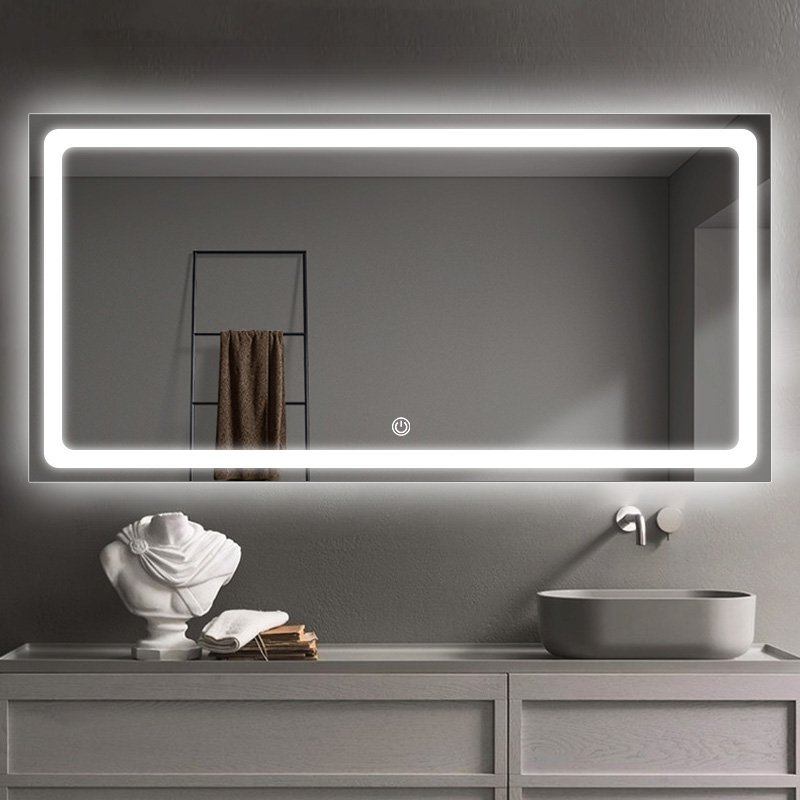
LED mirrors produce better reflections because they shine even, shadow-free light directly onto your face — right at the mirror surface. Regular overhead lights cast shadows from above, making your face look uneven. A espejo de tocador con luces LED o Espejo de tocador iluminado fixes this by lighting you from the front, the same way professional photographers and makeup artists light their subjects.
Here’s a side-by-side comparison of how regular mirrors and LED mirrors stack up:
| Característica | Regular Glass Mirror | Espejo LED / Espejo inteligente |
|---|---|---|
| Built-in lighting | ❌ None | ✅ LED strips or backlight built in |
| Color temperature control | ❌ Not possible | ✅ Adjustable from warm to cool white |
| Anti-fog in steamy bathrooms | ❌ No | ✅ Available |
| Reflection quality in low light | ⚠️ Poor — dim and shadowy | ✅ Bright and clear |
| Funciones inteligentes (Bluetooth, reloj) | ❌ No | ✅ Available on smart mirrors |
| Magnification zones | ❌ No | ✅ Optional built-in |
| Motion sensor activation | ❌ No | ✅ Available |
| Frame styles | Basic | ✅ Including mirrors with black frame |
| Custom sizes and shapes | Very limited | ✅ Fully customizable |
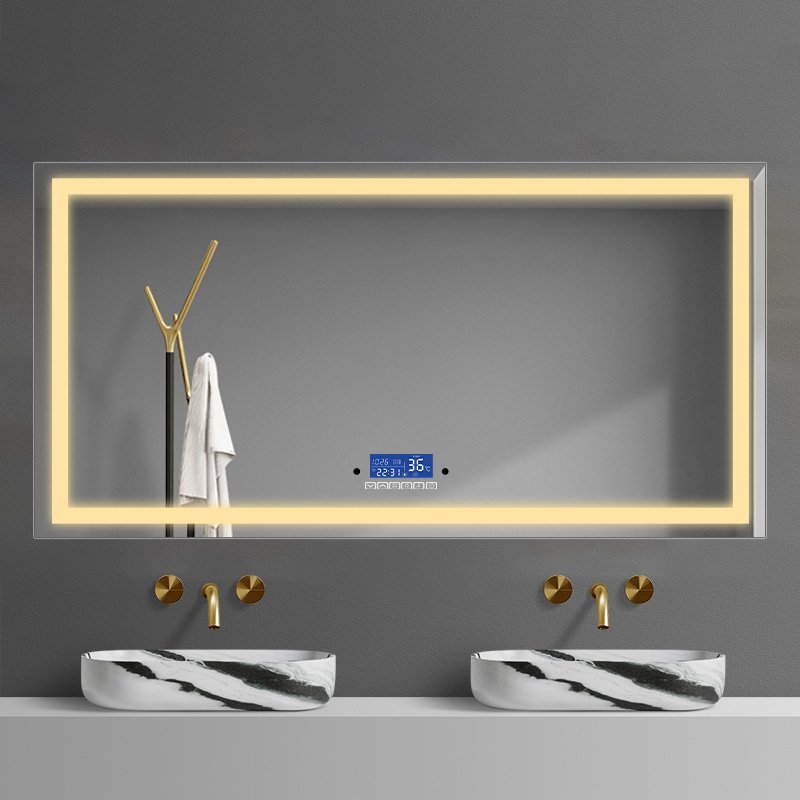
Beyond better reflections, Espejos inteligentes y Espejos LED come packed with features that regular mirrors simply can’t offer. Anti-fog coating means your mirror stays clear even after a hot shower. Many vanity mirrors with LED lights include Bluetooth speakers, pantallas de temperatura, and motion-activated lighting. For anyone renovating a bathroom, upgrading from a plain espejo del baño to a modern bathroom mirror with integrated LED lighting is one of the easiest wins for both style and practicality. And for businesses importing lighted vanity mirrors for bathroom retail, these extra features make it easy to justify a premium price point — because customers can immediately feel the difference.
Can a Mirror Reflect in Complete Darkness?
Here’s a fun one to think about: if you’re alone in a pitch-black room with a mirror, what do you see? Nothing. A mirror in complete darkness reflects absolutely nothing. Mirrors don’t create light — they only redirect light that already exists. No light hitting the surface means no reflection. In true darkness, a mirror is just a blank piece of glass with a metal backing — completely inactive.
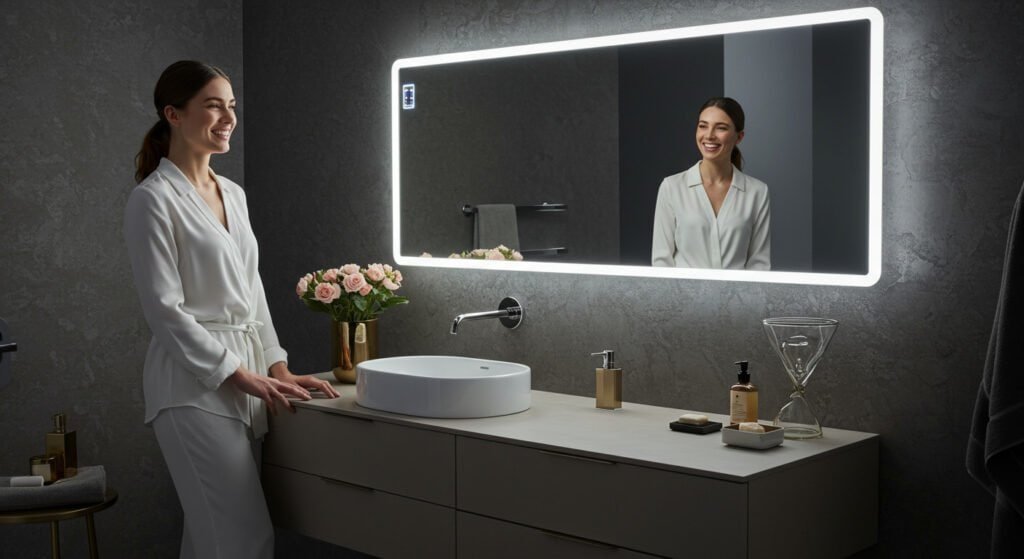
This is exactly why bathroom vanity lights, built-in Espejos de baño LED, y Espejos de tocador iluminado have become such a big deal in modern home design. It’s not just about looking stylish (though they do look great). It’s about function. A dark bathroom with a regular espejo del baño gives you a dim, shadowy reflection that’s practically useless for putting on makeup or checking your appearance before a big meeting. A espejo retroiluminado o Iluminando el espejo de vanidad solves this completely — it builds the light source directly into the mirror itself, so you always get a bright, clear reflection no matter how dark the rest of the room is. Espejos iluminados modernos para baños with LED strips along the edges or glowing from behind the panel have become the go-to solution for exactly this reason. It’s not a luxury — it’s just smart design.
Why Should You Cover Mirrors at Night?
You’ve probably seen this advice somewhere online — but where does it actually come from?
Covering mirrors at night is a tradition rooted in cultural and spiritual beliefs rather than science. Jewish mourning tradition, feng shui, and various folk beliefs all have their own reasons for it. From a purely practical standpoint, covering reflective surfaces near your bed can reduce light bouncing around your room at night, which may actually help you sleep better.
In feng shui, a mirror facing your bed is thought to create restless, active energy that makes it harder to sleep. In Jewish tradition, mirrors are covered during the mourning period called Shiva — the idea is to focus on grief rather than personal appearance. In various European folk traditions, an uncovered mirror at night was considered bad luck or spiritually risky. Ahora, from a completely science-based angle: wall mirrors with lights o lighted bathroom mirrors near a bedroom can bounce light from streetlamps or passing cars right onto your face while you sleep. That kind of light interruption is genuinely proven to disrupt sleep quality. So whether your reason for covering the mirror is spiritual, cultural, or just practical — there’s a real argument for it either way.
What Does God Say About Mirrors?
This might be the most surprising section of the article — mirrors show up in religious texts more than you’d expect.
The most famous religious mirror reference is from the Bible — 1 Corinthians 13:12: “For now we see through a glass, darkly; but then face to face.” The mirror here is a metaphor for the limits of human understanding. We only see a partial, imperfect picture of truth — like looking into an old, foggy mirror. Perfect knowledge belongs to God alone.
It’s worth knowing that in biblical times, mirrors weren’t espejos de vidrio like we have today. They were made from polished bronze or copper — and they gave blurry, dim reflections at best. So when the Bible used a mirror as a metaphor for imperfect understanding, it was something every reader could immediately relate to. The Book of James (1:23–24) also references mirrors, comparing someone who hears wisdom but ignores it to a person who glances at their mirror reflection of yourself and immediately forgets what they look like. The message: don’t just look — actually pay attention to what you see. Mirrors also appear as symbols of truth and self-awareness in Islamic, Hindu, and Buddhist traditions. Across all of them, the underlying idea is the same: a mirror shows you a version of reality — but never the full picture. Even the clearest Espejo de baño LED o espejo retroiluminado can only show you what light allows. The rest, as they say, is beyond the glass.
Conclusión
Mirrors don’t see — they just redirect light. But the quality of that light, and the mirror behind it, determines how much of reality you actually get to see.
- Para aprender a elegir el espejo de baño derecho, haga clic aquí.
- Para aprender a instalar un espejo elija aquí.
- Para aprender a elegir el espejo de tamaño correcto, haga clic aquí.
- Para aprender cómo se hacen los espejos, haga clic aquí.
- Haga clic aquí y aprenderá por qué nos vemos mejor en los espejos.
- Haga clic aquí, aprenderá sobre la parte superior 10 Fabricantes de espejo LED para 2024.
- Haga clic aquí para averiguar por qué no se enciende mi luz de espejo de vanidad?
- Descubra qué tan alto debe ser el espejo del baño? Haga clic aquí
- Haga clic aquí si no sabe cómo limpiar su espejo
- Para saber cómo arreglar el espejo del sensor táctil, no funciona, haga clic aquí
- Descubrir 10 Problemas de espejo de baño LED comunes Haga clic aquí